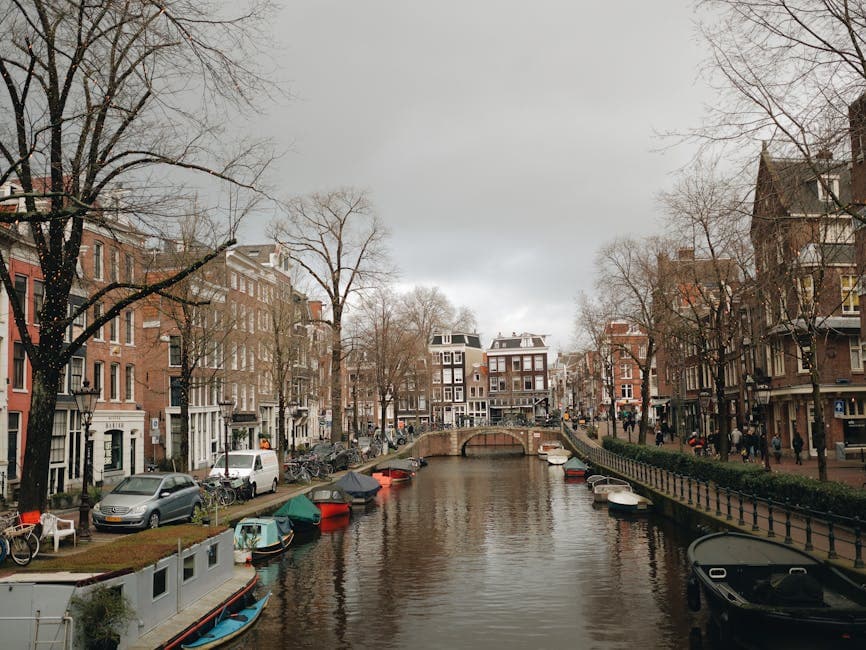
Dutch vs Flemish Transcription: The Variant Gap
Summarize this article with:
Standard Netherlands Dutch transcribes cleanly with Whisper Large-v3 at roughly 5% WER on formal audio. Flemish Belgian Dutch costs you 3-8 percentage points more error, and informal tussentaal (the everyday mid-register mixing standard and dialect) costs even more. The gap is structural: most ASR training data skews toward Netherlandic broadcast speech, not Antwerp dinner-table conversation. Otter.ai does not support Dutch at all. Tools that do include TurboScribe, Happy Scribe, Amberscript (Dutch-native), and CATT.
The core problem with Dutch and Flemish transcription is not the language itself: Dutch is well-supported by every major ASR engine. The problem is that standard Netherlands Dutch and everyday Belgian Flemish diverge enough phonologically and lexically to produce meaningfully different accuracy figures, and most tools are trained heavily on Netherlandic broadcast data.
Knowing which register and region your audio comes from before you pick a tool or review workflow will save more time than any other single decision.
The Variant Gap: What the Numbers Actually Say
Whisper Large-v3 achieves roughly 5% WER on clean, formal Netherlands Dutch audio, placing it near English-level performance. On formal Standard Belgian Dutch (the kind used in VRT newsrooms), the gap is modest: researchers working with the Corpus Gesproken Nederlands report roughly 1-3 percentage points higher WER versus Netherlandic standard speech.
The gap widens fast as you move toward informal registers:
- Tussentaal (the everyday Belgian mid-register): 10-15% WER is a reasonable expectation on typical conversational audio.
- Peripheral dialects: West Flemish and Limburgish Belgian consistently show documented ASR bias. A 2023 ESSV study confirmed underperformance for West Flanders and Limburg speakers. CGN-corpus benchmarks have shown WER reaching 25% on dialectal Flemish and as high as 66% on the heaviest local varieties.
- Frisian (spoken in the Netherlands' Friesland province): a separate West Germanic language, not Dutch. No production ASR tool handles it as a first-class language; expect 60-70% WER or worse transcribing Frisian through a Dutch pipeline.
The single "nl" language code Whisper accepts does not distinguish nl-NL from nl-BE. OpenAI trained on a predominance of Netherlandic data, so the model's priors pull toward Netherlands pronunciation even when you are working with Belgian audio.
Why Flemish Sounds Different to an ASR Model
Three phonological features drive most of the accuracy gap.
The G split. Northern Netherlands Dutch uses the harde G, a harsh, uvular or velar fricative. Belgium uses the zachte G, a softer, further-forward sound. These are phonetically distinct enough that a model calibrated on the harsh northern G will misclassify or miss-weight the same phoneme in Belgian speech. Because the letter G appears in almost every sentence in Dutch, this one feature compounds across an entire transcript.
Melodic intonation. Flemish speech has a noticeably more musical, rising intonation pattern. Netherlands Dutch tends toward flatter, falling contours. ASR models infer word boundaries and clause structure partly from prosody, so Flemish's different pitch movement introduces systematic uncertainty at those boundaries.
Vowel length and rounding. Flemish vowels are often more rounded and elongated than their Netherlandic equivalents. The long /a:/ in Belgian Dutch sits in a slightly different acoustic space than the same vowel produced by an Amsterdam speaker. Fine-tuned Dutch models trained specifically on Belgian data outperform general-purpose models for exactly this reason.
Tussentaal: The Register Nobody Trained On
Tussentaal is colloquial Belgian Dutch: not a dialect, not standard Dutch, but a fluid mid-register that most Flemish speakers use for any informal context. It is defined by specific features:
- Second-person pronoun: "gij/ge" instead of standard "jij/je," with associated verb forms ("gij zijt" not "jij bent").
- French loanwords woven in: "merci," "allez," "kot" (student room), "schoon" (beautiful in informal use), "GSM" instead of "mobiel."
- Vocabulary Belgicisms: "goesting hebben" (to feel like doing something), "amai" as an exclamation, "frigo" for refrigerator.
- Pronunciation blended from regional dialect and broadcast standard.
An ASR model that has never seen "gij zijt" in training will produce "jij bent" or garble the phrase entirely. For podcast and interview audio from Flanders, assume you are working in tussentaal and budget review time accordingly.
Code-Switching: English and French
Dutch business and tech audio code-switches heavily with English, particularly in Amsterdam, Utrecht, and Antwerp corporate environments. Whisper Large-v3 handles sentence-boundary switching well. In-sentence switching produces occasional phonetic approximations of English words that need one-pass correction.
Belgian Dutch also code-switches with French, particularly in Brussels and among older Flemish speakers. Words like "allez," "merci," "voila," and "bonjour" appear in otherwise Dutch sentences. These French fragments usually transcribe correctly because they appear in Whisper's training data, but watch for French proper nouns that get Dutchified in pronunciation.
Dutch Script and Diacritics
Dutch uses the Latin alphabet. The main transcription-specific issues:
- The digraph ij functions as a single vowel in Dutch and is sometimes rendered as a single character on Dutch keyboards. A correct transcript writes "ij" consistently (not "IJ" or "y").
- Diaeresis marks vowel separation: "Belgie" written correctly as "Belgie" with diaeresis (not "Belgie"), "geinteresseerd" with diaeresis on the second e. If your tool drops the diaeresis, you lose orthographic precision that matters in formal documents.
- Acute accents appear in loanwords and emphasis: "cafe," "resume."
- Dutch compound words are written closed: "autoverzekering" (car insurance), not "auto verzekering." ASR models trained on text that inconsistently splits Dutch compounds will produce fragmented output.
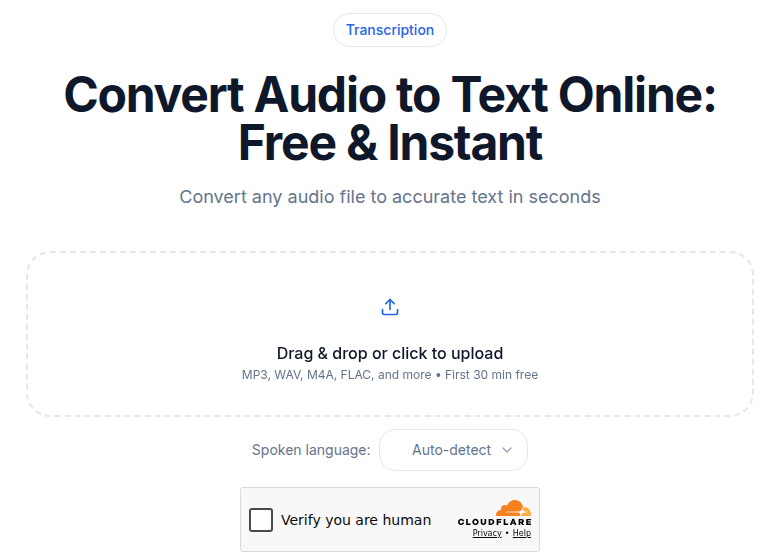 CATT audio upload tool for Dutch and Flemish audio files
Comparing Tools That Actually Support Dutch
A correction first: Otter.ai does not support Dutch. As of mid-2026, Otter's language list covers English, French, Spanish, German, Japanese, and Chinese. Its name should not appear in any Dutch transcription comparison.
| Tool | Dutch support | Flemish nl-BE | Free tier | Starting price |
|---|---|---|---|---|
| TurboScribe | Yes (Whisper-based) | Via general nl | 3 files/day (up to 30 min each) | $10/mo (annual) |
| Happy Scribe | Yes | Not separately listed | 10-minute trial only | €17/mo (120 AI min) |
| Amberscript | Yes, Dutch-native | Explicit nl-BE support | None | ~€0.25/min pay-as-you-go |
| Trint | Yes | No separate BE variant | 7-day trial, max 3 files | ~$52/seat/mo (annual) |
| CATT | Yes | Via general nl | First file free on premium; then up to 30 files a day, up to 30 min each | $14.99/mo unlimited |
Happy Scribe's pricing is in euros (€17/mo Basic, €29/mo Pro, €0.20/min overage). Trint is priced per seat at around $52/seat/month billed annually, and is designed for newsrooms rather than solo users. Amberscript is the only tool here with a dedicated Dutch team and explicit nl-BE recognition, which matters for premium Flemish work.
My take: for Dutch podcasts and interview recordings where you want an AI summary in Dutch rather than English, CATT's audio-to-text tool handles both variants without per-minute caps. For Flemish corporate content where accuracy on formal Belgian speech is the priority and cost is secondary, Amberscript's Dutch-native pipeline earns its premium. For deep dialect audio (West Flemish village conversations, Limburgish-inflected speech), expect to budget significant human review time regardless of tool.
Speaker Diarization in Dutch Audio
Dutch business conversation is typically structured and speaker-turn-taking is clear, which helps diarization. Realistic expectations:
- Two-speaker formal interview: 92-96% diarization accuracy.
- Three-to-four speaker podcast: 80-88%.
- Group discussion (5+ speakers, overlapping): 70-82%.
The Flemish tendency to talk over each other in casual group settings (more common in Belgian than Dutch conversational norms) degrades diarization more than any ASR accuracy issue.
ASR Compound Word Handling
Dutch's productive compounding is a consistent challenge. "Arbeidsongeschiktheidsverzekering" (disability insurance), "zorgverzekeringstelsel" (healthcare insurance system), or common phrases like "overheidsorganisatie" (government organization) appear in training data at lower frequency than their component words. Models without a strong Dutch vocabulary model split these at word boundaries or produce errors in the middle.
For specialized Dutch content (legal, medical, financial), provide a custom vocabulary or glossary if your tool supports it. This single step reduces compound-word errors more than any other configuration change.
Practical Setup for Flemish Content
- Set the language to Dutch ("nl"). Most tools do not offer a separate nl-BE selection; Amberscript is the main exception.
- For formal Standard Belgian Dutch (news, corporate communications, official meetings), expect accuracy close to the NL baseline. Review pass should take under 10 minutes per hour.
- For casual Flemish interviews and podcasts in tussentaal, plan a 15-25 minute review pass per recorded hour.
- For West Flemish or Limburgish dialect content, a human reviewer with native dialect knowledge is necessary. No current production tool handles these variants cleanly.
- Record with per-microphone capture when possible. Diarization accuracy on multi-speaker calls improves substantially versus mixed-room audio.
- Dutch has many fricative consonants that lose definition in reverberant spaces. A low-reverb recording environment or a directional mic improves ASR performance more for Dutch than for vowel-heavy languages like Spanish or Italian.
Working with Suriname and Caribbean Dutch
Suriname Dutch and the Dutch varieties of Aruba, Curacao, Bonaire, and Sint Maarten are official-language Dutch with regional vocabulary and contact influence from Sranan Tongo and Papiamento. The standard Dutch pipeline produces 88-92% accuracy on formal Suriname Dutch. Local vocabulary items (especially place names and culturally specific terms) may not appear in the base model's dictionary and will need manual correction. Sranan Tongo and Papiamento are separate languages that the Dutch pipeline does not handle.
FAQ
Does Whisper handle Flemish Belgian Dutch as well as Netherlands Dutch?
No. On clean formal speech, the gap is modest (roughly 1-3 percentage points WER). On informal Flemish, tussentaal, and deep dialects like West Flemish or Limburgish the gap widens sharply. Research on the CGN corpus shows WER jumping from around 7% on standard speech to 25% or higher on dialectal Flemish, and as high as 66% on the heaviest local varieties. Whisper's single "nl" language code does not separate nl-NL from nl-BE, so it applies a single model trained predominantly on Netherlandic data.
What is tussentaal and why does it matter for transcription?
Tussentaal (literally "in-between language") is the informal spoken register used in everyday Flemish life. It sits between the formal Standard Dutch taught in schools and the deep local dialects, and it is what most Belgian conversations actually sound like. ASR systems trained on broadcast Dutch treat tussentaal as noise because its pronunciation, verb forms, and vocabulary diverge from the written standard. For transcription, expect to review more carefully any casual Belgian interview or podcast compared to formal newsroom speech.
Does Otter.ai support Dutch?
No. As of mid-2026, Otter.ai supports English, French, Spanish, German, Japanese, and Chinese. Dutch is not on that list. If you need Dutch or Flemish transcription, Otter.ai is not an option.
Which transcription tool works best specifically for Flemish content?
Amberscript is headquartered in Amsterdam, employs Dutch-speaking human reviewers, and explicitly lists nl-NL and nl-BE support. It is the strongest choice when accuracy on Flemish corporate or media content is critical and budget allows (from around 0.25 EUR per minute pay-as-you-go). TurboScribe (Whisper-based) and CATT are solid options for lower-cost Flemish work, with CATT offering AI summaries in Dutch and no per-minute cap on paid plans.
Sources
- Otter.ai Pricing - verified July 2026
- Otter.ai Supported Languages Help Center
- Happy Scribe Pricing - verified July 2026
- Amberscript Pricing - verified July 2026
- TurboScribe Pricing - verified July 2026
- Deepgram: Top 6 Dutch ASR Challenges
- ESSV 2023: Bias in Flemish Automatic Speech Recognition
- Improving the Inclusivity of Dutch Speech Recognition by Fine-tuning Whisper on JASMIN-CGN
- Wikipedia: Hard and soft G in Dutch
- Frontiers: Clearing the Transcription Hurdle in Dialect Corpus Building
Try transcription free
Convert any audio or video to clean, unwatermarked text — speaker labels, timestamps, and AI summaries included. First 30 minutes free, no account.
Related Articles

Arabic Transcription: MSA vs Dialects in ASR (2026 Guide)
How diglossia shapes Arabic speech-to-text accuracy. MSA vs Egyptian, Gulf, Levantine, and Maghrebi dialects: WER data, engine support, and script mechanics explained.
Mandarin Transcription: Simplified, Traditional, and Tones
Mandarin Chinese transcription: Simplified vs Traditional output, tone homophones, Cantonese honesty, and engine support in 2026.