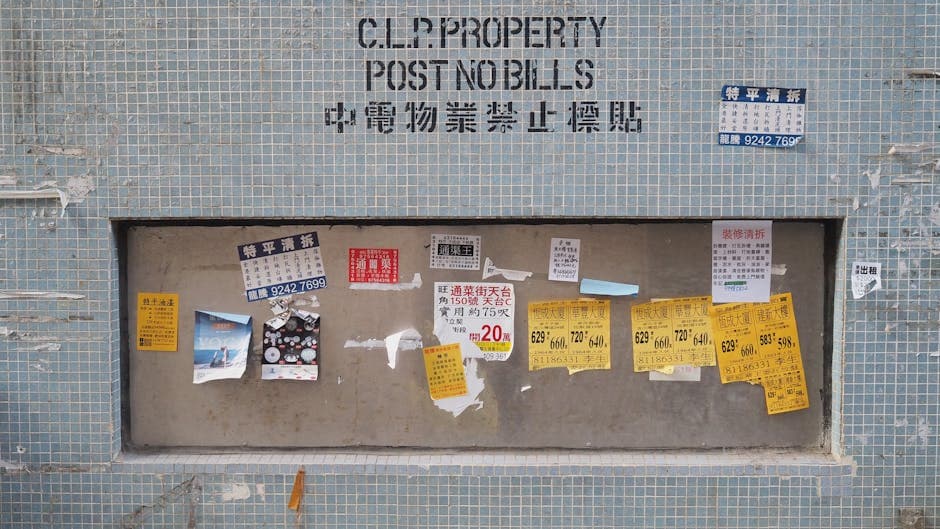
Mandarin Transcription: Simplified, Traditional, and Tones
Summarize this article with:
Mandarin transcription works well in 2026 for clean studio audio, but you need to make three decisions before you start: Simplified or Traditional output, which language code to pass, and whether your audio is actually Cantonese (a different language for ASR purposes). Tones are handled by the engine automatically and should not appear in the transcript. Homophone disambiguation and mixed Mandarin-English code-switching are the main accuracy hazards. If you want a clean transcript without a meeting bot, ConvertAudioToText handles both Simplified and Traditional output at /tools/audio-to-text.
Mandarin transcription in 2026 produces clean, readable text when you set the right language code and understand what the engine can and cannot resolve on its own. The two decisions that matter before you start are: which character set do you need, and is the audio actually Mandarin rather than Cantonese.
 Mandarin output comes in Simplified or Traditional; translation is separate
Simplified vs Traditional: It Is About Your Audience, Not the Audio
The spoken language on your recording is the same regardless of whether the speaker is from Shanghai, Taipei, or Singapore. The written output is not. Simplified Chinese (jiantizi) is standard in mainland China and Singapore. Traditional Chinese (fantizi) is standard in Taiwan, Hong Kong, Macau, and diaspora publishing.
Every major ASR engine routes Mandarin audio to one character set based on the language code you supply:
zhorzh-CNorzh-Hans: Simplified outputzh-TWorzh-Hant: Traditional outputzh-HK: on Deepgram Nova-3, this specifically addresses Cantonese Traditional
Setting the language code explicitly matters. Automatic language detection on short or noisy Mandarin clips has a known failure mode: Deepgram's own issue tracker documents cases where Mandarin is misidentified as English on Nova-2 and Nova-3. Always pass the explicit code.
If your workflow spans both regions, the safer path is to transcribe in Simplified and convert to Traditional using a context-aware tool like OpenCC. A naive character-swap table does not work cleanly because many simplified characters map to more than one traditional character, and choosing the right one requires context. A one-to-many mapping, like 發/髮 (both simplified as 发) requires knowing whether the word means "to send" or "hair."
Why Tones Do Not Appear in Your Transcript
Mandarin's four tones (plus a neutral tone) are the engine's problem to solve, not yours to mark. The transcription output is standard written Chinese characters with no tone diacritics. What the engine actually does is use tonal information acoustically to pick the right character from a set of homophones, then output that character silently.
Homophones are the main accuracy risk in Mandarin transcription. The phoneme inventory of Mandarin is small relative to the number of morphemes it encodes, which means many syllables sound identical: shì can mean right (是), matter (事), room (室), market (市), power (势), and dozens more. The engine must resolve this from context and language modeling, not phonetics alone.
Domain-specific terms sharpen this problem. A medical recording using 心 (heart) versus 新 (new) in compound words, or a legal context using 法 (law) versus 发 (emit), requires domain knowledge that a general model may not have. Supplying a glossary of key terms when available reduces these errors. Chinese names are particularly vulnerable because given names use a small pool of characters with many homophonic options and no rigid convention.
Pinyin output with tone marks (nǐ hǎo rather than 你好) is a secondary format useful only in language-learning contexts. Standard transcripts for any other purpose use characters.
Mandarin vs Cantonese: Two Different ASR Problems
This distinction matters practically and is often misunderstood. Cantonese (Yue Chinese) is a separate language from Mandarin for ASR purposes, not a regional accent.
Cantonese has six tones to Mandarin's four-plus-neutral, different phonology, and a large gap between colloquial spoken form and its written representation. A speaker from Hong Kong code-switches between Cantonese speech and written Chinese characters that may represent Mandarin grammatical structure. This makes Cantonese ASR a harder problem even at a technical level.
A Mandarin-trained model presented with Cantonese audio will transcribe the most phonetically similar Mandarin words, producing output that sounds related but is frequently wrong at the word level. The accuracy drop is not a small degradation.
Deepgram Nova-3 now lists zh-HK as Cantonese Traditional, separate from the Mandarin Simplified and Traditional variants. That separation is the right architectural decision. For tools that do not distinguish, check whether Cantonese is explicitly listed as a supported language before transcribing Hong Kong or Guangdong content.
For mixed Mandarin-Cantonese meetings (common in Hong Kong corporate settings), the practical workflow is to transcribe using the Mandarin model and plan for a review pass by a Cantonese-literate editor on the code-switched segments.
See why AI struggles with low-resource languages for the training-data mechanics behind these accuracy gaps.
Taiwanese Mandarin (Guoyu) vs Mainland Mandarin (Putonghua)
Guoyu and Putonghua share a common written standard and mutual intelligibility, but they diverge in ways that affect ASR.
The acoustic differences: Taiwanese Mandarin lacks erhua (the 儿化 suffix common in Beijing speech, e.g. nǎr rather than nǎlǐ for "where"). Speakers in Taiwan also commonly merge the retroflex consonants zh/ch/sh into z/c/s, so "zhōngwén" sounds more like "zōngwén." Pitch range also differs: Taiwanese Mandarin speakers often use a narrower pitch range, and the rising tone can resemble the falling-rising tone acoustically.
The vocabulary differences: A study of the 7,000 most commonly used characters found approximately 18% divergence between standard usage in Taiwan and the mainland, dropping to 13% for the 3,500 most frequent characters. These include Taiwanese terms with Hokkien or Japanese origin that a mainland-trained model may render as phonetic approximations using other characters.
Setting zh-TW routes the engine to expectations appropriate for Taiwanese speech patterns and ensures Traditional character output. The zh-TW code is not just about character set; on well-configured models it also adjusts acoustic weighting toward Guoyu phonology.
Chinese-English Code-Switching in Practice
Tech and business Mandarin almost always contains English. A sentence like "我們需要review一下這個PR" (We need to review this PR) or "這個KPI很重要" (This KPI is important) is standard spoken form in Chinese technology companies.
Well-trained multilingual models handle this by keeping English words in Latin script rather than phoneticizing them. The output you want is: review stays as review, acronyms like KPI and OKR stay in Latin, and proper nouns like Apple and Google remain in English.
The failure mode is at code-switching boundaries, where the engine may drop a syllable or misparse a short English word as a Mandarin morpheme. Mid-clause switching ("因為這個API...") is harder than whole-word insertion. If your audio is dense with mid-clause English, test on a real sample before committing to a pipeline.
See how to fix multilingual code-switching issues for practical remediation steps.
Full-Width Punctuation Is Not Optional
A correctly formatted Mandarin transcript uses full-width punctuation as standardized in GB/T 15834-2011:
- 。for a sentence-ending period (not
.) - ,for a comma (not
,) - 、for an enumeration separator in lists
- :for a colon
- 「」or 《》for quotation contexts
If your transcription output returns Mandarin text with half-width ASCII punctuation (., ,), the transcript is nonstandard. For publishing to mainland Chinese audiences, Taiwanese audiences, or any Chinese-language document, this needs correction before use. Some tools produce correct full-width punctuation by default; others require post-processing.
Engine Support for Mandarin in 2026
Deepgram Nova-3 is the standout change for 2026 in Mandarin. Nova-3 supports Simplified (zh, zh-CN, zh-Hans), Traditional (zh-TW, zh-Hant), and Cantonese (zh-HK) as explicit variants. Deepgram reported a 65.21% relative WER reduction on Simplified Mandarin batch transcription compared to Nova-2, and 44.87% for Traditional. These are relative improvements, not absolute accuracy figures, but the directional improvement is substantial. For more on the engine see Deepgram Nova-3 explained.
AssemblyAI Universal-2 supports Mandarin Chinese, placing it in the ">10% to less than or equal to 25% WER" accuracy band per their documentation. That means it works, but Mandarin is not in their top accuracy tier. Their Universal-3 Pro model documentation does not list Mandarin in the detailed language support tables as of mid-2026, so Universal-2 is the confirmed route for Chinese on AssemblyAI.
OpenAI Whisper Large-v3 handles Mandarin with reasonable performance. Fine-tuned Chinese-specific variants (such as Belle-whisper-large-v3-zh) show 24 to 65% relative improvement on Chinese ASR benchmarks over the base model, which is an indicator of where the base model's Mandarin ceiling sits. For technical or domain-specific Chinese content, a fine-tuned variant is worth evaluating.
Regional Mandarin with heavy non-standard phonology (Sichuan, Shanghainese-accented Mandarin, Hokkien-influenced Mandarin) still sits below standard Putonghua accuracy for all major engines. The training data skew toward formal broadcast Mandarin is a structural limitation.
A comparison of how different engines perform on lower-resource languages is in transcription accuracy explained.
Comparing Tools for Chinese Transcription
| Feature | Otter.ai | Notta | Deepgram Nova-3 API | CATT |
|---|---|---|---|---|
| Mandarin Simplified | Yes (beta) | Yes | Yes (zh-CN) | Yes |
| Mandarin Traditional | No (Simplified only) | Yes | Yes (zh-TW) | Yes (zh-TW) |
| Cantonese | No | Yes | Yes (zh-HK, separate) | Limited |
| Chinese AI summary | English only | Chinese | Requires own LLM | Chinese |
| Free tier | 300 min/mo | 120 min/mo | $200 API credit | First file free on premium, then up to 30 files a day, up to 30 min each |
| Paid price | $8.33/mo (annual) | $9.99/mo (annual) | $0.0043/min batch | $14.99/mo or $99.99/yr, unlimited |
| Code-switching | Limited | Reasonable | Depends on model | Yes |
Otter's Chinese support is Simplified-only and marked beta in their own documentation, which makes it a poor choice for Taiwan-facing content or Traditional-output needs. Notta supports both Simplified and Traditional and has a dedicated Chinese audio-to-text page indicating genuine Mandarin investment. Deepgram's API route gives you the most precise control over language codes and variants, at the cost of requiring your own integration.
My take: for standalone audio files where you need clean Simplified or Traditional output without a meeting-bot dependency, ConvertAudioToText is the straightforward route. For multilingual API pipelines where you're building your own product, Deepgram Nova-3 is where I would start in 2026 given the documented WER improvements on Mandarin.
Speaker Diarization for Chinese
Chinese business audio tends toward structured turn-taking in formal contexts. Two-speaker interviews with clear pauses produce cleaner diarization than casual podcasts where speakers talk over each other.
The diarization challenge specific to Mandarin is that Chinese conversational norms include affirmative backchanneling (嗯, 对, 好) spoken at low volume while the main speaker continues. This produces false speaker-change events in less sophisticated diarizers.
Per-microphone recording, where available, eliminates most of these errors. For podcast-style audio with one microphone, plan for a light review pass on diarization in overlapping segments.
See speaker diarization explained for how the underlying algorithm handles these cases.
Tips for Better Mandarin Transcription
- Set the exact language code:
zh-CNfor Simplified,zh-TWfor Traditional,zh-HKfor Cantonese. Default detection is unreliable on short clips. - Supply a glossary of proper nouns (person names, brand names, internal product names) before processing. Chinese given names are particularly vulnerable to homophone misselection.
- For technical content, include domain terms. A model that does not know 机器学习 (machine learning) as a compound may split it incorrectly.
- Record in low-noise conditions. Tonal distinctions are the primary disambiguation signal and they compress under background noise.
- Treat Cantonese audio as requiring a separate tool or separate language code, not as a variant of a Mandarin setting.
- For AI summaries in Chinese, verify that the tool generates the summary in Chinese rather than summarizing in English and calling it done. Most Western-oriented meeting tools do English summaries only.
FAQ
Should I use Simplified or Traditional Chinese output for my transcript?
Match your audience: Simplified (zh-CN) for mainland China and Singapore content, Traditional (zh-TW) for Taiwan, and zh-HK for Hong Kong. The same spoken Mandarin produces different character output depending on the language code you pass to the engine. If your audience crosses regions, transcribe in Simplified and convert using a context-aware library like OpenCC, which handles the many simplified characters that map to more than one traditional character.
Do tones appear in Mandarin transcripts?
No. Standard Mandarin transcripts output Chinese characters, not pinyin with tone marks. The engine uses tonal distinctions to disambiguate homophones and choose the right character, but those distinctions are absorbed into the character selection process and never printed. The result is clean text in the form your readers expect, like 你好 rather than nǐ hǎo.
Why does Cantonese accuracy drop even when I select Chinese?
Cantonese (Yue Chinese) is a distinct language from Mandarin, not an accent of it. It has six tones compared to Mandarin's four-plus-neutral, different phonology, and limited standardized written form. ASR engines trained on Mandarin data perform badly on Cantonese audio. Deepgram Nova-3 offers zh-HK as a separate variant, and that is the right code for Cantonese audio. For other tools, check whether they list Cantonese as a distinct language option before transcribing Hong Kong Cantonese content under a general Chinese setting.
How does Mandarin-English code-switching affect transcription?
Tech and business Mandarin frequently mixes English terms mid-sentence. Well-trained multilingual models handle this by keeping English words in Latin script rather than phoneticizing them into characters. Acronyms like KPI, OKR, and API stay in Latin script. Product names like Apple and Microsoft do too. The challenge is when a speaker switches mid-clause rather than mid-word: some engines drop a syllable at the switch boundary. Testing on a real sample of your audio before committing to a pipeline is worth doing.
What language codes should I use for Mandarin transcription?
For Mandarin Simplified, use zh, zh-CN, or zh-Hans. For Traditional, use zh-TW or zh-Hant. On Deepgram Nova-3, zh-HK is Cantonese Traditional. On AssemblyAI Universal-2, Mandarin Chinese is supported. Always set the variant explicitly rather than relying on automatic language detection, because Mandarin can be misidentified as other languages on short or noisy clips.
Is Taiwanese Mandarin (Guoyu) handled differently from mainland Putonghua?
They are close enough that most engines handle both under a single Mandarin model, but they diverge in measurable ways. Taiwanese Mandarin lacks the erhua (儿化) suffix common in Beijing speech, and speakers often merge the retroflex consonants zh/ch/sh into z/c/s. Vocabulary also differs: roughly 13 to 18 percent of commonly used characters differ in standard usage between Taiwan and the mainland. Setting zh-TW signals these expectations to the engine and also routes output to Traditional characters, which is the standard writing system in Taiwan.
Sources
- Deepgram Nova-3 Expands to Asia-Pacific (Deepgram)
- Deepgram Models and Languages Overview
- AssemblyAI Supported Languages
- Otter.ai Supported Languages (Help Center)
- Otter.ai Pricing
- Notta Pricing
- Notta Chinese Audio to Text
- Taiwanese Mandarin (Wikipedia)
- Chinese Punctuation (Wikipedia)
- Deepgram Nova-3 Mandarin changelog (March 31, 2026)
Try transcription free
Convert any audio or video to clean, unwatermarked text — speaker labels, timestamps, and AI summaries included. First 30 minutes free, no account.
Related Articles

Arabic Transcription: MSA vs Dialects in ASR (2026 Guide)
How diglossia shapes Arabic speech-to-text accuracy. MSA vs Egyptian, Gulf, Levantine, and Maghrebi dialects: WER data, engine support, and script mechanics explained.
Best Transcription for Asian Languages in 2026
Verified guide to transcribing Mandarin, Japanese, Korean, Hindi, Thai, and Vietnamese audio in 2026. Covers CER benchmarks, engine strengths, and pricing by language.