Arabic Transcription: MSA vs Dialects in ASR (2026 Guide)
Summarize this article with:
Arabic is a diglossic language: Modern Standard Arabic (MSA) and regional dialects share a writing system but diverge sharply in vocabulary and phonology, creating very different accuracy profiles for AI transcription. Deepgram Nova-3 is the only major API that supports all 17 Arabic dialect codes as named parameters. Whisper large-v3 handles MSA well but word error rates climb significantly on dialects, especially Maghrebi Arabic. Most consumer meeting tools (Otter.ai, Fireflies) do not support Arabic at all. If you need clean Arabic transcripts without a complex API setup, ConvertAudioToText handles MSA and the major dialects with RTL output included.
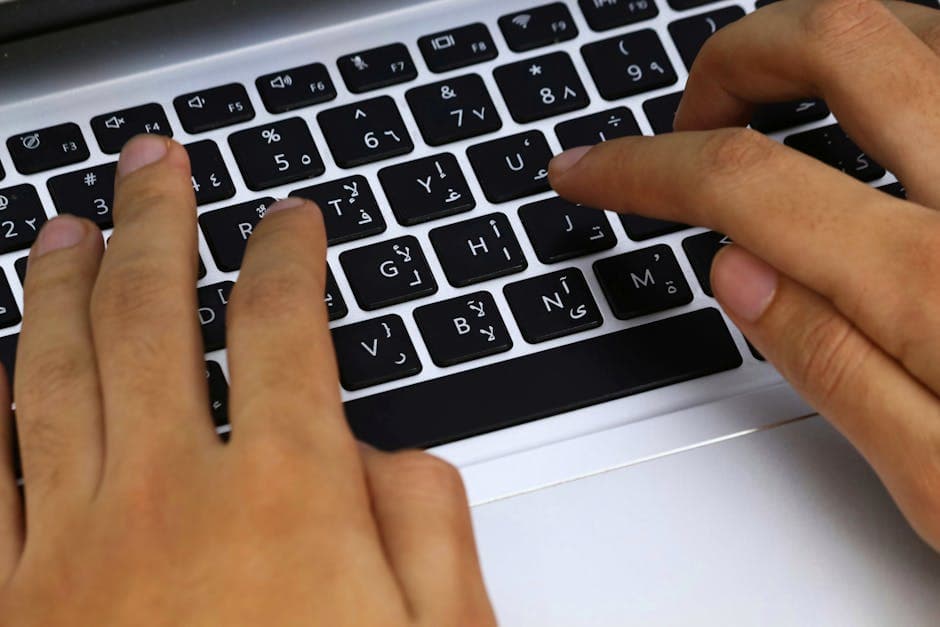
Arabic speech-to-text is harder than almost any other language, and the reason is diglossia. Most languages have one spoken form that maps reasonably onto one written form. Arabic has two: Modern Standard Arabic (MSA), used in formal writing, broadcast news, and religious contexts, and a constellation of regional dialects (Egyptian, Gulf, Levantine, Maghrebi, Iraqi, and more) that native speakers actually use in daily life. They share the same 28-letter script but differ enough in vocabulary and phonology that a Moroccan and a Kuwaiti switching from dialect to MSA is roughly comparable to the register shift between formal academic English and a local creole. For AI transcription, this creates a tiered accuracy landscape where the variant you have determines which engine to use and how much review to budget.
 Arabic transcription accuracy differs sharply between MSA and dialects
The Diglossia Problem: Why "Arabic" Is Not One ASR Target
MSA is nobody's mother tongue, but every educated Arabic speaker understands it. It is the language of Al Jazeera and Al Arabiya broadcasts, university lectures, official government documents, and Friday sermons in most mosques. The script is fully standardized. Phonology is consistent. Training data is abundant.
Regional dialects are a different challenge. They share the script but not the vocabulary or pronunciation conventions. Moroccan Darija and Saudi Najdi Arabic are mutually unintelligible in natural spoken form, a Riyadh native and a Casablanca native would default to MSA to communicate, or to French or English if one of them has it. This means ASR engines trained on one dialect fail unpredictably on another.
The research literature confirms the gap. Studies benchmarking Whisper models on dialectal Arabic report word error rates in the 25-50% range for dialects, against roughly 15-20% WER for clean MSA broadcast speech. Whisper large-v3 sometimes produces English translations instead of Arabic transcriptions on dialectal input, an artifact of its multilingual training that the medium model handles better in certain dialect-heavy scenarios. These numbers come from peer-reviewed ASR benchmarks, not vendor marketing, treat them as directional rather than exact figures for your specific audio conditions.
Modern Standard Arabic: Where Accuracy Is Strongest
MSA is the easiest Arabic for AI transcription. Broadcast-style audio, news anchors, scripted presentations, formal speeches, achieves the lowest word error rates of any Arabic variety across all major engines. If your content comes from news agencies, academic lectures, religious sermons delivered in formal register, or official government statements, you can expect AI output comparable to what you'd get from European language transcription.
The script mechanics work in your favor here. MSA follows codified orthographic rules. Hamza placement (above alef, below alef, on waw, on ya, or standalone) is standardized in formal writing even if engines sometimes disagree on which form to output. The letter combinations are predictable. Word boundaries are clear.
One orthographic note that affects how you read the output: tashkeel (the diacritical marks that indicate short vowels: fatha, kasra, damma, sukun, shaddah) are almost always omitted in standard Arabic writing. Newspaper articles, academic papers, and business correspondence are written without them. AI transcription follows this convention. The output will be undiacritized Arabic, matching what you would read in any professional Arabic publication. If you need diacritized output for Quranic content or language-learning materials, that requires a separate post-processing step.
RTL rendering is handled at the display and export layer. A properly configured SRT or DOCX file will flag the content direction so word processors and subtitle players render it correctly. If Arabic appears reversed in your subtitle player, the issue is the player, not the transcript file.
Egyptian Arabic: The Best-Supported Dialect
Egyptian Arabic has the most training data of any Arabic dialect, largely because Egypt has dominated Arabic-language film, television, and music for decades. Al Masri (Cairo Egyptian) is widely understood across the Arab world. An Egyptian soap opera is intelligible to a Jordanian or a Bahraini in a way that Moroccan Darija is not.
For ASR, this translates to better accuracy than any other dialect. Cairo urban speech lands at the top of the range; rural Upper Egyptian dialects with heavier pharyngeal consonant variation land lower. Egyptian Arabic also incorporates Turkish, French, and English loan vocabulary that has been stable for long enough that models handle it correctly.
If your content is Egyptian Arabic, podcasts, call-center recordings, YouTube commentary, interview recordings from Egypt, you have the most favorable dialect conditions of any non-MSA variety.
Gulf Arabic: Significant Within-Group Variation
Gulf Arabic covers Saudi Arabia, UAE, Qatar, Kuwait, Bahrain, and Oman. The variation within Gulf Arabic is substantial. Najdi Arabic (central Saudi Arabia) differs meaningfully from Hijazi Arabic (western Saudi Arabia), and both differ from Emirati or Omani. This matters for transcription: selecting a generic "Gulf Arabic" model may handle some subvarieties better than others.
Gulf business content in the UAE and Qatar frequently code-switches with English, especially in tech, finance, and corporate communications. Deepgram Nova-3 provides named dialect codes for each Gulf country (ar-AE, ar-SA, ar-QA, ar-KW), which lets you route audio to the closest regional acoustic model rather than a generic Arabic model. Whether this makes a meaningful accuracy difference in practice depends on how dialectally marked the speech is versus how much MSA it contains.
Levantine Arabic: French and English Code-Switching
Levantine Arabic covers Syria, Lebanon, Jordan, and Palestine. Beirut Lebanese is the most linguistically complex Levantine variety for ASR because it freely mixes Arabic with French, sometimes mid-sentence, and also English. A Lebanese tech podcast might switch between Arabic, French, and English within a single speaker turn. This is not unusual or informal; it is how educated Lebanese speakers naturally communicate.
Current ASR engines handle sentence-boundary code-switching better than in-sentence switching. When an Arabic sentence is followed by a French one, models handle the transition reasonably. When a single sentence contains Arabic verbs, French nouns, and English brand names, the output quality degrades. Whisper handles some multilingual switching because of its multilingual training, but accuracy is not reliable enough to skip review on heavily code-switched Lebanese or Algerian content.
Research on Arabic-English code-switching benchmarks reports WER in the 24-50% range across code-switched corpora, which underlines why review time is non-negotiable for this content type.
Maghrebi Arabic: The Hardest Case in Arabic ASR
Moroccan, Algerian, and Tunisian Arabic (collectively called Darija) is the hardest Arabic variety for every major ASR engine. Three factors combine to create this difficulty:
First, Darija absorbed massive Berber (Tamazight) vocabulary. Moroccan Darija uses Tamazight words for everyday objects and actions that have no Arabic equivalent. These simply do not appear in MSA or eastern dialect training data.
Second, Darija is phonologically compressed. Short vowels that appear in MSA are dropped entirely in natural fast speech, creating consonant clusters that are uncommon in other Arabic varieties.
Third, code-switching with French is constant in Morocco, Algeria, and Tunisia. This is not occasional borrowing; it is structural. An Algerian speaker may use French verbs conjugated with Arabic morphology within the same sentence. For an engine that needs to decide whether to output Arabic script or Latin characters, this creates fundamental ambiguity.
The mutual intelligibility data illustrates the asymmetry: speakers from Egypt, the Gulf, and the Levant generally cannot follow natural Darija speech. Maghrebi speakers, through media exposure to eastern dialects, typically can follow Egyptian and Levantine Arabic better. This same asymmetry appears in ASR training data coverage.
If your audio is Moroccan or Algerian Darija, budget for a substantial review pass. This is not a failure of the tools; it is a data coverage problem that the research community is actively working on.
Which Engines Actually Support Arabic Dialects
The major engines differ significantly in how explicitly they address Arabic dialect variation.
Deepgram Nova-3 is the most explicit about dialect support. Arabic was a Nova-3 addition (Nova-2 did not support Arabic). Nova-3 provides 17 named dialect codes covering all major regional groups: ar for generic Arabic, plus ar-AE, ar-SA, ar-QA, ar-KW for Gulf countries; ar-SY, ar-LB, ar-PS, ar-JO for Levantine countries; ar-EG, ar-SD for the Nile region; ar-MA, ar-DZ, ar-TN for the Maghreb; and ar-IQ, ar-TD, ar-IR for Mesopotamian and peripheral varieties. Deepgram claims up to 40% lower WER versus competing systems on dialect-heavy speech, though the specific reference numbers for each dialect are not publicly disclosed in granular form. Keyterm Prompting across all dialects lets you inject domain terminology at inference time, which helps with proper nouns, brand names, and technical vocabulary.
AssemblyAI Universal-3 Pro supports Arabic across 99 languages and handles dialect variation automatically without requiring a specific dialect code. The Universal-2 model documentation places Arabic in the "10-25% WER" accuracy tier. Universal-3 Pro is newer and performs better, though AssemblyAI does not break out per-dialect WER publicly. Speaker diarization is supported. See the best speech-to-text APIs in 2026 for a broader comparison.
Speechmatics claims a 4.5% WER on Arabic, outperforming Google, OpenAI Whisper, AssemblyAI, and Deepgram on their internal benchmarks (with 35% fewer errors than their nearest competitor on Arabic-English code-switching tasks). They cover MSA, Egyptian, Levantine, Gulf, and Maghrebi varieties. Pricing is not publicly listed; they offer 40 hours of free transcription per month for evaluation.
OpenAI Whisper (large-v3) handles MSA well but shows WER degradation on dialects. Research papers report Whisper-large-v3 WER around 30-32% on dialect-heavy Arabic test sets, with occasional hallucination where the model outputs English translations instead of transcribing. The medium model sometimes outperforms large-v3 on certain Arabic dialect benchmarks, which is counterintuitive but documented. See OpenAI Whisper API pricing in 2026 for cost context.
Google Cloud STT supports Arabic and multiple variants. Standard V2 transcription costs $0.016 per minute. Google does not publish dialect-specific accuracy benchmarks publicly.
Otter.ai does not support Arabic. Its supported languages are English, Spanish, French, German, Japanese, and Chinese (Simplified). If your meetings or interviews are in Arabic, Otter is not the tool. For a broader comparison of meeting transcription tools and their language limits, see best transcription for Zoom 2026.
| Engine | Arabic dialect codes | MSA accuracy | Dialect accuracy | Arabic pricing |
|---|---|---|---|---|
| Deepgram Nova-3 | 17 named codes | Strong | Best-in-class per vendor | Metered, volume tiers |
| AssemblyAI Universal-3 Pro | ar (auto-dialect) | Strong | Good (10-25% WER range) | Per-minute metered |
| Speechmatics | All major dialects | Claims 4.5% WER | Covers Maghrebi, Gulf | Not public; 40 hrs free |
| OpenAI Whisper large-v3 | ar (no dialect codes) | Good | 30-50% WER on dialects | $0.006/min via API |
| Google Cloud STT | ar + variants | Good | Standard support | $0.016/min standard |
| Otter.ai | Not supported | N/A | N/A | N/A |
Practical Workflows by Content Type
Arabic newsroom transcription (MSA broadcast audio) is the clearest win for AI: the audio is clean, the register is formal, and every major engine does well. MSA interview audio from outlets like Al Jazeera, Reuters Arabic, or BBC Arabic follows predictable phonology, and the output needs light cleanup.
Arabic podcasts vary enormously by host region and audience. An Egyptian cultural podcast and a Moroccan comedy podcast are acoustically and lexically different enough that accuracy on one tells you little about the other. Run a short test clip in your actual content before committing a batch to any engine.
Religious content (Quranic recitation, Friday sermons) falls into two categories. Quran recitation is MSA in a specific tajweed phonological style, which is distinct enough that general-purpose models may struggle even though it is technically MSA. Standard sermons in formal MSA transcribe well. Sermons in local dialect (common in Maghrebi mosques) follow the same accuracy caveats as any other Darija audio.
Academic interviews and qualitative research recordings are where speaker diarization for Arabic matters most. Multi-speaker recordings in a formal research context, structured interviews, focus groups, benefit from diarization even if the dialect is not MSA.
If you just need clean Arabic transcripts without building an API pipeline, ConvertAudioToText handles MSA and major dialects with RTL output included. The first 30 minutes of any file are free with no account. A free account runs your first file on the premium engine (up to an hour), then keeps transcribing free: up to 30 files a day, up to 30 minutes each, which you can read, edit and copy free. The Pro plan, at $14.99 per month, works for Arabic podcasters, researchers, and journalists who need consistent volume without per-minute billing complexity.
Five Tips Specific to Arabic Audio
Set the language explicitly. Auto-detect works for Arabic, but it is slower and occasionally misclassifies Maghrebi Arabic as Amazigh or Hausa due to acoustic similarity in compressed speech. Passing ar explicitly, or a dialect code where supported, skips the detection step.
Provide a proper noun glossary. Arabic personal names have many valid transliteration conventions and the same person's name can appear as Ibrahim, Ibrahem, or Ebrahim in the same transcript. If your content features recurring names, a glossary or keyterm list anchors the output.
Check the hamza and alef output if it matters. Engines disagree on which alef form to use for initial hamzated alef (alef with hamza above vs. plain alef). For formal documents where orthographic consistency matters, a normalization pass through an Arabic text normalizer catches these variants.
Record close-mic for emphatic and pharyngeal consonants. Arabic has pharyngeal fricatives (ayin, ghain) and emphatic consonants (sad, dad, tad, dhad) that carry acoustic energy lost easily in ambient noise. Close-mic recording preserves these distinctions; distant or phone-quality recording smears them, which raises WER regardless of which engine you use.
For Darija, triangulate. Run a 2-minute test clip through two different engines and compare. Because Maghrebi training data coverage varies by engine, the best performer for your specific subdialect and topic is not predictable in advance.
FAQ
Can AI accurately transcribe Arabic dialects, or only MSA?
Accuracy varies considerably by dialect. MSA from broadcast sources achieves the lowest word error rates across all engines. Egyptian Arabic is the best-supported dialect due to abundant training data from Egyptian film and TV. Maghrebi Arabic (Moroccan, Algerian Darija) consistently produces the highest error rates because of heavy Berber vocabulary and French code-switching that most models were not trained on.
Why does Moroccan Darija cause so many transcription errors?
Moroccan Darija (and to a lesser extent Algerian Arabic) dropped most short vowels in ordinary speech, borrowed extensively from Tamazight (Berber) for everyday vocabulary, and code-switches with French mid-sentence. For ASR models trained primarily on MSA and Egyptian data, this combination means unfamiliar phonotactics, unknown lexical items, and script-switching between Arabic and Latin characters, all at once. Plan for a heavier review pass on Darija audio.
Does Arabic transcription output include diacritics (tashkeel)?
No, by default. Standard Arabic writing, news articles, business documents, academic papers, omits diacritics entirely. Native readers infer vowels from context. AI transcription follows this convention, so output will be undiacritized Arabic matching what you would read in Al Jazeera or a university textbook. Diacritized output (needed for Quranic text or language-learning materials) requires a separate post-processing step and is not a standard feature of ASR pipelines.
Does Otter.ai or Fireflies support Arabic?
Otter.ai does not support Arabic. Its supported languages are English, Spanish, French, German, Japanese, and Chinese (Simplified). Fireflies similarly targets English-primary workflows. If your meeting or interview is in Arabic, you need a dedicated transcription service that explicitly lists Arabic language support.
Which engine handles Gulf Arabic and Levantine Arabic best for business use?
Deepgram Nova-3 provides the most explicit dialect-level support, with named codes for each Gulf country (ar-AE, ar-SA, ar-QA, ar-KW) and each Levantine country (ar-SY, ar-LB, ar-PS, ar-JO), letting you target the specific regional acoustic model. AssemblyAI Universal-3 Pro also supports Arabic and handles dialect variation automatically without requiring a dialect code. Speechmatics claims strong Arabic accuracy and covers Egyptian, Gulf, Levantine, and Maghrebi varieties.
Sources
- Deepgram: Nova-3 Arabic Speech-to-Text
- Deepgram: Models and Languages Overview
- AssemblyAI: Supported Languages
- Speechmatics: Arabic Speech to Text
- Otter.ai: Supported Languages Help Center (confirms no Arabic)
- Google Cloud: Speech-to-Text Pricing
- Arxiv: Overcoming Data Scarcity in Multi-Dialectal Arabic ASR via Whisper Fine-Tuning
- Arxiv: A Survey of Code-switched Arabic NLP
- Interspeech 2025: Open Universal Arabic ASR Leaderboard
Try transcription free
Convert any audio or video to clean, unwatermarked text — speaker labels, timestamps, and AI summaries included. First 30 minutes free, no account.
Related Articles
Mandarin Transcription: Simplified, Traditional, and Tones
Mandarin Chinese transcription: Simplified vs Traditional output, tone homophones, Cantonese honesty, and engine support in 2026.
Dutch vs Flemish Transcription: The Variant Gap
How Dutch ASR accuracy differs between Netherlands Dutch and Flemish Belgian Dutch, tussentaal realities, dialect challenges, and which tools actually support nl-NL vs nl-BE.