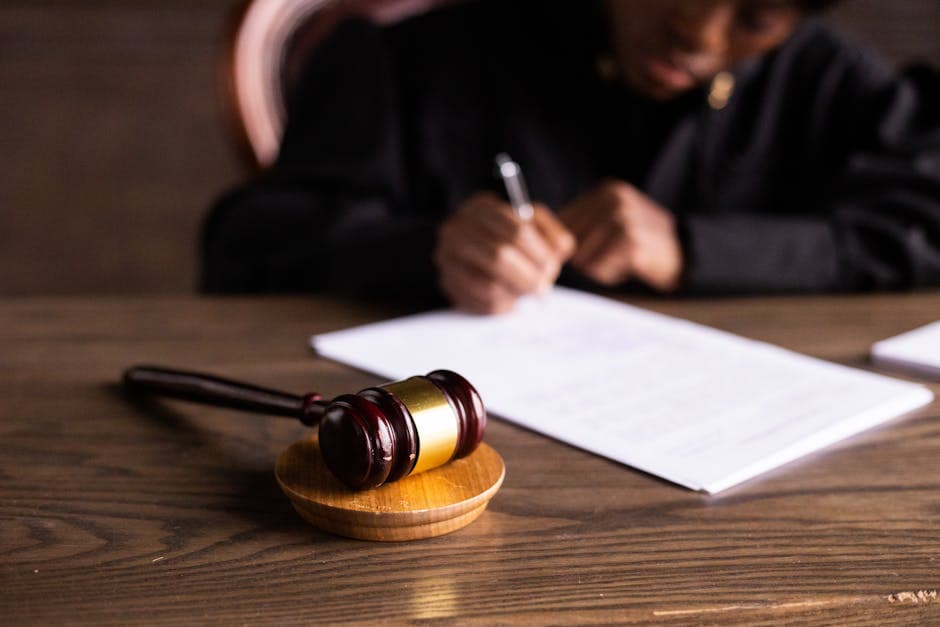
Court Hearing Transcription: Official Records vs AI Copies 2026
Summarize this article with:
Official court transcripts must come from a certified court reporter or court-approved electronic recording system. Under 28 U.S.C. 753, only transcripts certified by the designated reporter carry the official record status required for appeals, motion citations, and sentencing references. AI transcription serves the case-prep lane: working copies attorneys use to review what happened, draft responses, and prepare witnesses before the certified transcript arrives weeks later. This post explains the two-lane system, what federal rates look like after the October 2024 Judicial Conference update, and where AI fits without overstating what it can do.
Court hearings generate two categories of transcripts that serve entirely different purposes. The official record comes from a certified court reporter or court-approved electronic recording system. AI transcription produces working copies for internal case preparation. Confusing these two lanes wastes money and, in appeal contexts, risks procedural error.
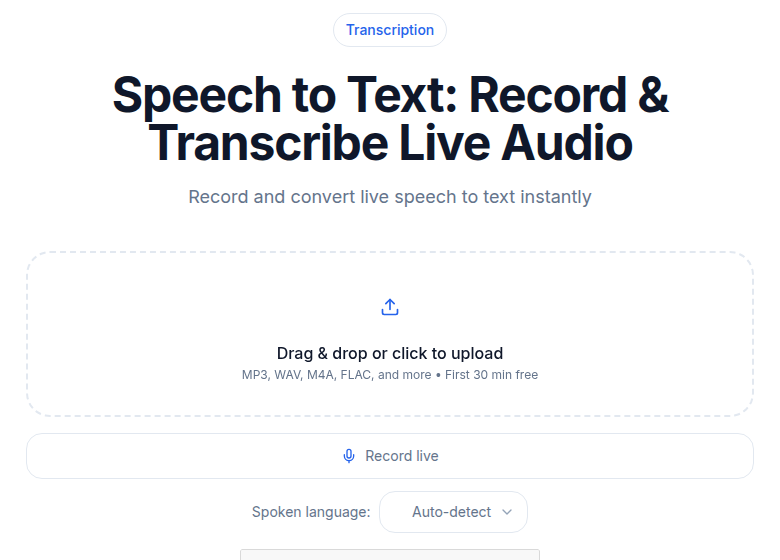 The working-copy lane: permitted audio in, internal draft out in minutes
This post is informational only and is not legal advice. Rules vary by jurisdiction. Consult your bar rules and local court rules for authoritative guidance.
Why the Two-Lane System Exists
Federal law draws the line clearly. Under 28 U.S.C. § 753, "no transcripts of the proceedings of the court shall be considered as official except those made from the records certified by the reporter or other individual designated to produce the record." A transcript certified by the designated reporter "shall be deemed prima facie a correct statement of the testimony taken and proceedings had."
That language means AI alone cannot produce an official record, regardless of accuracy. Certification is a legal act by a credentialed human. AI tools are not credentialed; they produce drafts.
The practical result is a two-lane system: the official lane for the legal record, and the working-copy lane for everything else attorneys do to prepare a case.
| Official Transcript | AI Working Copy | |
|---|---|---|
| Source | Certified court reporter or court-approved ER | AI transcription of permitted audio |
| Legal status | Official record, prima facie correct | Internal draft, no certification |
| Use in briefs | Cite with page and line | Cannot substitute |
| Use in appeals | Required by appellate courts | Not accepted |
| Use in case prep | Expensive for early drafting | Fast and low-cost |
| Turnaround | 30 days ordinary, expedited options | Minutes to hours |
| Cost | Regulated per-page rates | Low fixed subscription |
How Federal Courts Handle the Official Record
Federal courts use one of two approaches under § 753:
Court reporter system. A certified court reporter attends every proceeding and produces stenographic notes. The transcript is produced from those notes on request.
Electronic recording system. Many federal magistrate and bankruptcy courts use digital audio recording instead of a live reporter. The clerk's office produces transcripts from the recordings on request.
In both systems, the certified transcript is the official record reviewed by courts of appeals. It is what is cited in briefs, quoted in motions, and attached to appellate appendices.
Federal transcript costs are regulated by the Judicial Conference. Rates effective October 1, 2024:
| Delivery Speed | Original (per page) | First Copy (per page) |
|---|---|---|
| 30-Day (Ordinary) | $4.40 | $1.10 |
| 14-Day | $5.10 | $1.10 |
| 7-Day (Expedited) | $5.85 | $1.10 |
| 3-Day | $6.55 | $1.30 |
| Next-Day (Daily) | $7.30 | $1.45 |
| 2-Hour (Hourly) | $8.70 | $1.45 |
At the standard 30-day rate, a 200-page hearing transcript costs $880 for the original. Order it on a next-day basis and that rises to $1,460. Realtime transcript feeds during the hearing are also available at separately negotiated rates.
How State Courts Vary
State requirements differ considerably:
California has historically required licensed Certified Shorthand Reporters (CSR) for court proceedings. The state licenses reporters through the Court Reporters Board, and the shortage of licensed reporters has become an acute access-to-courts issue in recent years. As of 2024, the Los Angeles County Superior Court authorized electronic recording in certain family, probate, and civil proceedings, with ongoing legislative debate about broader expansion.
Many other states permit digital court reporting systems and have clearer regulatory frameworks for electronic recording. The practice is legal in every state, but the specific requirements for depositions, trials, and hearings differ by proceeding type and court level.
Texas allows parties to bring their own court reporters for depositions and some proceedings. The rules for trial and hearing transcripts differ from deposition rules.
For any state court matter, the clerk's office is the authoritative source for how transcripts are ordered and what constitutes the official record.
When You Must Use the Official Transcript
Four categories of situations where the certified transcript is the only option:
Appeals. Appellate courts review the official record. Your brief must cite the certified transcript with page and line numbers. Submitting or citing an AI draft instead would be procedurally improper and would likely draw a response from opposing counsel.
Motions citing prior testimony. When a motion attaches or quotes prior hearing testimony, the citation must be to the official transcript. The AI working copy does not carry prima facie evidentiary weight.
Sentencing proceedings. Pre-sentencing reports and sentencing memoranda referencing prior hearings cite the certified transcript. The same applies to sentence-reduction proceedings that require showing what was said at prior hearings.
Stipulations that become part of the case file. Any document that enters the case record should cite official sources.
For guidance on how AI-generated transcripts interact with evidentiary rules more broadly, see whether AI transcription is court-admissible.
Where AI Working Copies Fit
Several legitimate uses exist in the case-prep lane:
Pre-order review. Before spending $1,000 or more ordering an expedited certified transcript of a long hearing, an attorney often wants to know what the record actually contains. An AI working copy produced from a publicly available recording supports that preliminary review.
Same-day brief drafting. Waiting 30 days for an ordinary certified transcript is impractical when you need to respond to an oral ruling. An AI working transcript supports same-day drafting; final citations get replaced with official page and line numbers when the certified transcript arrives. Flag those placeholders clearly in your draft.
Witness preparation. Preparing a witness for a follow-up hearing based on what happened at the prior one is faster with a readable working transcript than relying entirely on notes.
Multi-hearing analysis. In complex litigation with ten or twenty hearings, searching a set of AI working transcripts for a name, a term, or a topic is faster than reviewing PDFs of certified transcripts one at a time.
Internal team review. When the litigation team is evaluating what happened and planning next steps, an AI working copy supports the discussion without requiring everyone to wait weeks for the official version.
For a comparison of when to pay for human review versus use AI for legal working copies, see AI vs. human transcription.
How to Get the Audio
The recording question is jurisdiction-dependent:
Public recording requests. Many federal and state courts make audio recordings of public proceedings available to the parties and sometimes to the public. The clerk's office handles these requests. Costs vary by court.
Your own recording. Some courts permit attorneys to record for personal note-taking. Many do not. Recording without explicit permission in a federal courtroom is not only prohibited, it may carry contempt consequences.
Remote proceedings. Hearings via Zoom, Teams, or court-specific platforms often have a built-in recording the court provides to the parties. Many courts now permit attorneys to record their own copy of remote hearings. Confirm with local rules before activating any recording on your end.
Phone or personal device. Prohibited in most in-person proceedings. Do not attempt this without written confirmation from the court.
Speaker Identification
Certified transcripts follow standard court speaker conventions:
- THE COURT: the judge
- MR. SMITH / MS. JONES: counsel identified by name
- THE WITNESS: witness testimony (often under an examination heading)
- THE CLERK / THE BAILIFF: court personnel
AI tools label speakers automatically but produce generic labels (Speaker 1, Speaker 2, and so on). For an internal working copy where the attorney knows who is who, this is generally fine. For any document being shared more broadly, manual review to apply proper speaker names improves usability.
On how speaker diarization works technically and what its limits are, see speaker diarization explained.
Hearing Types and What Each Requires
Plea hearings. Often 20 to 40 minutes. Formal allocution language dominates. The certified transcript may be cited in plea-related appeals or sentence-reduction filings.
Sentencing hearings. Often one to two hours. Counsel argument and defendant statements matter on appeal. The certified transcript is critical. AI working copies help with same-day response planning.
Motion hearings. Variable length. When the court issues its ruling on the record, the transcript of that ruling becomes a key document. Expedite the certified transcript for any contested ruling.
Status and pretrial conferences. Often routine. Official transcripts not typically ordered unless something contested happened. AI working copies support internal team notes.
Verdict and post-verdict hearings. Short but significant. Polling the jury and post-verdict motions are made on the record.
Options for Working Copies
For attorneys who want a human-reviewed working copy rather than AI-only output, Rev offers human transcription at $1.99 per audio minute (per rev.com, checked July 2026). A two-hour hearing runs approximately $239. That rate still does not produce a court-certified transcript, but it adds a human review step. Rev's human tier is appropriate for high-stakes working copies where AI accuracy alone is not sufficient.
Otter.ai handles general meeting transcription but is optimized for business meetings rather than legal proceedings with multiple formal speakers and legal vocabulary.
My take: for most litigation teams handling regular appearances, the cost structure favors AI for working copies and certified transcripts for everything that gets cited. The working copy question is really about speed of internal review, not about replacing the certified record.
If you just need a clean working transcript of a permitted court audio recording without per-minute cost math, ConvertAudioToText handles long recordings on paid plans (links and videos up to 24 hours) and returns a readable draft within minutes. The Pro plan is $14.99 per month. It is not a court-certified record and should be used only for the internal case-prep purposes described above.
For a deeper look at pricing models across AI and human transcription services, see transcription pricing comparison.
Practical Workflow
For an attorney with a regular docket of hearings:
Before the hearing: confirm whether you can make your own recording. For in-person hearings, the answer is almost always no.
After the hearing: if a public recording is available, request it. If the hearing was remote and you have a permitted copy, upload it.
Within the day: AI working copy available for internal review and same-day drafting.
Within the first week: order the certified transcript for any hearing where you anticipate needing it for an appeal, motion, or cited proceeding. The sooner you order, the lower the per-page rate.
When the certified transcript arrives: replace any AI-based page references with official page and line citations before filing.
For a broader look at how these workflows apply to depositions, see the deposition transcription guide. For general practices on legal transcription, legal transcription best practices covers formatting, accuracy expectations, and when certification matters.
FAQ
Can I use an AI transcript as an official court record?
No. Under 28 U.S.C. 753, no transcript is considered official unless it is certified by the court reporter or other individual designated to produce the record. An AI transcript has no certification and cannot substitute for the official record in appeals, motions that cite testimony, or sentencing proceedings. AI working copies are appropriate for internal case preparation only.
How much does a federal court transcript cost per page?
Federal transcript rates are set by the Judicial Conference and were last updated October 1, 2024. The ordinary 30-day rate for an original is $4.40 per page. A 7-day expedited original is $5.85 per page. Next-day delivery (daily) runs $7.30 per page, and the 2-hour rate reaches $8.70. Copies cost less: $1.10 per page for the first copy on ordinary, expedited, or 7-day orders. A 200-page hearing ordered on an expedited 7-day basis runs approximately $1,170 for the original.
What states require a certified court reporter vs. electronic recording?
Requirements vary by jurisdiction and court level. Federal courts operate under 28 U.S.C. 753, which permits shorthand, stenotype, or electronic sound recording depending on judicial approval and Judicial Conference regulations. California historically required licensed Certified Shorthand Reporters (CSR), though some proceedings now allow electronic recording after a 2024 order in Los Angeles County. Many other states permit digital reporting systems. Always check the specific court's local rules and consult your bar rules before relying on any particular recording arrangement. Nothing in this post is legal advice.
Can I record a court hearing myself to create a working transcript?
Almost never for in-person proceedings. Recording devices are prohibited in most federal courtrooms and many state courtrooms without explicit permission. Remote proceedings are different: many courts permit attorneys to record their own copy of a Zoom or Teams hearing, and local rules have relaxed on this since 2020. Check the court's local rules before any recording attempt. When recording is permitted and you have the audio file, an AI transcription can produce a working copy within minutes.
How accurate is AI transcription for legal proceedings?
Accuracy depends heavily on audio quality, number of speakers, and whether legal vocabulary is handled correctly. Remote hearings with individual microphones tend to produce better AI results than single-room courtroom recordings. AI tools handle everyday speech well but can stumble on case names, proper nouns, and legal terms of art. For internal case-prep use, most attorneys find AI accuracy sufficient to follow the thread of proceedings and identify key moments. For citations in filed documents, the certified official transcript is the only acceptable source.
Sources
- 28 U.S.C. § 753 - Reporters (Cornell LII)
- Maximum Transcript Rates, District of Columbia (Oct 1, 2024)
- Maximum Transcript Rates, Northern District of Illinois (Oct 1, 2024)
- Federal Court Reporting Program, uscourts.gov
- Rev Human Transcription, rev.com (checked July 2026)
- Court Reporters Board of California, courtreportersboard.ca.gov
- ConvertAudioToText Pricing (checked July 2026)
Try transcription free
Convert any audio or video to clean, unwatermarked text — speaker labels, timestamps, and AI summaries included. First 30 minutes free, no account.
Related Articles
Deposition Transcription Guide: Who Makes the Record (2026)
How deposition transcription actually works in 2026: certified reporters, AI working drafts, rough-draft timelines, errata sheets, privilege risks, and cost breakdowns.
Transcription for Legal Discovery: Audio Evidence at Scale
How litigation teams handle audio in discovery: collecting recordings as ESI, privilege screening, defensibility of AI transcripts, and when certified transcription is required.