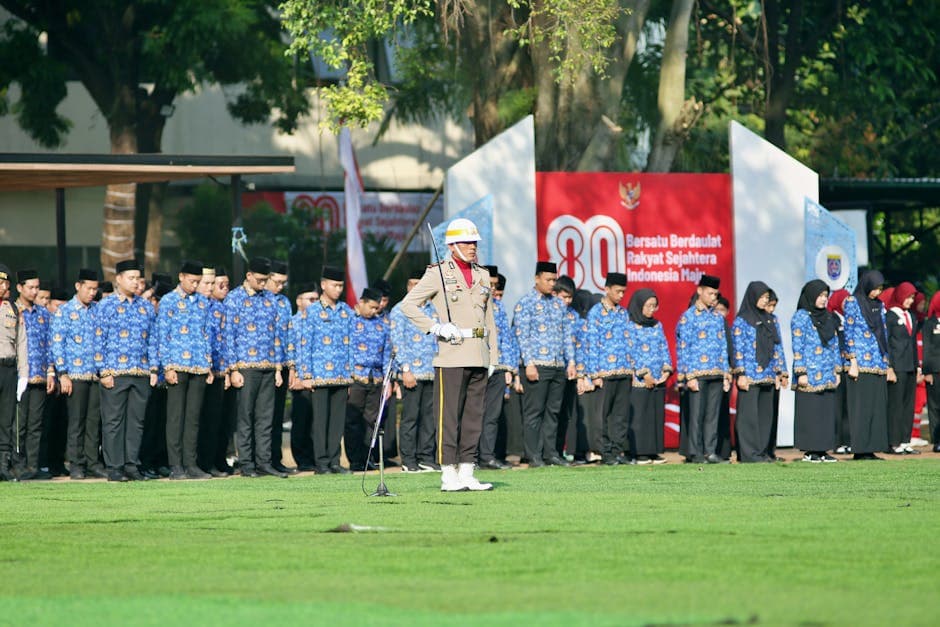
Indonesian Transcription: Formal vs Jakarta Colloquial
Summarize this article with:
Indonesian (Bahasa Indonesia) is one of the better-supported Asian languages for AI transcription in 2026, partly because it uses Latin script and has relatively consistent formal phonology. The main accuracy risks are not regional accents but the register gap between formal written Indonesian (bahasa baku) and the colloquial urban variety (bahasa gaul) spoken in most podcasts, vlogs, and casual interviews. A secondary trap is auto-detection: models sometimes confuse Indonesian with Malay, since both share a 1972 unified spelling system. Set the language code explicitly to avoid this. Deepgram Nova-3 added Indonesian support in January 2026; Whisper supports it across all model sizes.
Does AI Transcription Handle Bahasa Indonesia Well?
Yes, Indonesian is one of the better-supported non-European languages for AI transcription in 2026, and the reason is structural: Bahasa Indonesia uses Latin script with no diacritics, has a relatively shallow phoneme inventory for an Asian language, and has consistent formal spelling since the 1972 EYD reform. Every major ASR engine now supports it.
That said, "supported" and "accurate on your audio" are not the same thing. The gap between them is almost entirely a function of register, not engine choice.
The Formal-Colloquial Gap Is the Real Accuracy Story
The accuracy question most people ask is "what percentage?" The more useful question is "which Indonesian?"
Bahasa baku, the formal written standard, is what appears in news broadcasts, government proceedings, university lectures, and business reports. Models are trained primarily on this register. It is read, clean, and phonologically predictable.
Bahasa gaul, the colloquial urban variety from Jakarta that has spread through national media and social platforms, is something else. The same sentence looks completely different:
| Formal (baku) | Colloquial (gaul) |
|---|---|
| Saya (I/me) | Gua / Gue / Gw |
| Anda (you) | Lu / Lo |
| Sudah (already) | Udah |
| Habis (finished) | Abis |
| Terima kasih (thank you) | Makasih |
| Menanyakan (to ask, formal suffix) | Nanyain (-in replaces -kan) |
| Mengambil (to take, formal prefix) | Ngambil (nge- shortening) |
Beyond vocabulary, bahasa gaul adds modal particles that adjust the emotional tone of a sentence without changing its meaning: dong (certainty), sih (casual emphasis), deh (finality), lah (softening), kok (persuasion toward a skeptical listener). A model that has never seen these in quantity will either drop them or misread them as content words.
Research on Indonesian ASR has confirmed that speaking style variability affects accuracy more than noise or accent, with spontaneous colloquial speech producing measurably higher word error rates than read formal speech. If your content is podcasts, vlogs, casual interviews, or startup team recordings, treat the formal-register benchmark numbers you see advertised as an upper bound, not a typical result.
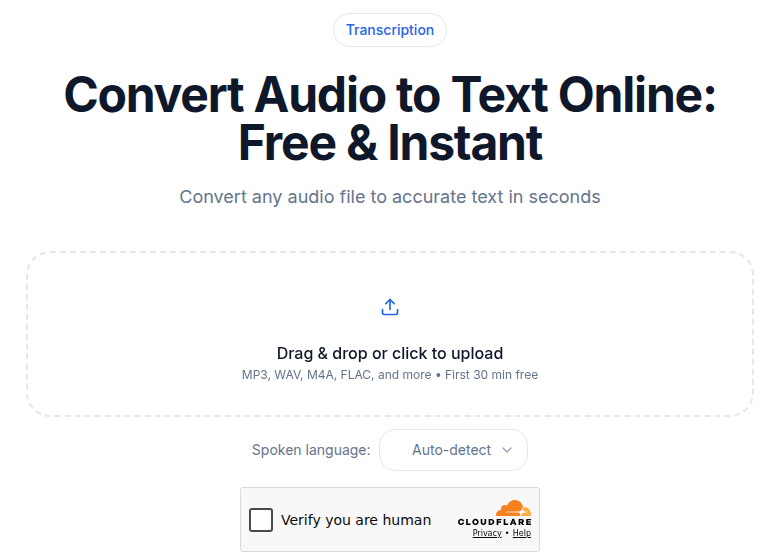 AI audio transcription tool for Bahasa Indonesia
The Indonesian-Malay Confusion Problem
Setting the language to Indonesian explicitly is not optional if accuracy matters. Here is why.
Indonesian and Malay are mutually intelligible and share the same writing system. The 1972 Indonesian-Malaysian orthography reform, known as EYD (Ejaan yang Disempurnakan) in Indonesia and ERB (Ejaan Rumi Bersama) in Malaysia, unified the spelling of both languages. Before 1972, they even used slightly different Latin representations of the same sounds: Indonesian had tj and dj where modern spelling uses c and j.
The result is that auto-detection models see audio that sounds very similar in both languages, read against near-identical script, and have a real chance of landing on Malay (ms) instead of Indonesian (id). When that happens, the transcript may use Malay vocabulary patterns rather than Indonesian ones, which is meaningfully different.
The divergence that actually helps a well-trained model tell them apart comes from loanwords. Indonesian absorbed heavily from Dutch during the colonial period: kantor (office, from Dutch kantoor), televisi (television, from Dutch televisie), polisi (police, from Dutch politie). Malaysian Malay borrowed the same concepts from English: pejabat (office), televisyen (television), polis (police). Indonesian phonology also preserves final /a/ where Peninsular Malay reduces it to a schwa.
Practically: set the language code to id in any transcription tool you use. Auto-detect is a convenience feature, not a precision tool, for a language pair this close.
Engine Support: What Is Verified for Indonesian in 2026
Three major ASR providers have confirmed Indonesian support with their current production models:
Whisper (OpenAI): Indonesian (id) is in Whisper's supported language list across all model sizes, including Large-v3. Whisper's multilingual training included Indonesian. The model handles formal Indonesian well. Research has shown that fine-tuning Whisper Medium on Indonesian datasets significantly reduces error rates, which indicates the base model has meaningful headroom on colloquial and spontaneous speech.
Deepgram Nova-3: Deepgram added Indonesian (id) to Nova-3 in January 2026, citing it as "a hybrid language blending Malay roots, English loanwords, and regional inflection, often used in multilingual environments." An updated Nova-3 Multilingual release in March 2026 reported a roughly 34% relative reduction in batch word error rate across supported languages. Nova-3 includes keyterm prompting for up to 100 domain-specific terms per request, which is directly useful for injecting Indonesian brand names, place names, and technical terms that would otherwise be mis-transcribed.
AssemblyAI: Indonesian is among the 99 languages supported by AssemblyAI's Universal model.
For a broader look at how these engines compare across other languages and pricing tiers, see the speech-to-text API pricing breakdown for 2026.
Indonesian-English Code-Switching
Indonesian tech, startup, and business content routinely mixes English into Indonesian sentences, and modern ASR engines handle this reasonably well. Sentences like "Kita perlu push ke production sebelum meeting" or "Dia bikin konten untuk social media" come back with the Indonesian portions in Indonesian and the English borrowings in English. Deepgram Nova-3 specifically names multilingual code-switching as a feature for Indonesian.
The harder case is Indonesian mixed with Javanese or Sundanese, which is common in informal audio from Central Java, East Java, and West Java. Neither Javanese nor Sundanese is a production-supported language in major ASR engines in 2026, so when those words appear in an otherwise Indonesian conversation, the model will guess at them phonetically rather than recognize them as a different language. For mixed-language content of this kind, human post-editing is likely necessary.
For language-specific accuracy context on closely related Southeast Asian languages, see the Tagalog and Filipino transcription guide.
Comparing Indonesian-Capable Transcription Tools
The table below reflects verified features and pricing as of mid-2026. Accuracy figures are vendor self-reported unless otherwise noted and should be treated as best-case claims.
| Tool | Indonesian support | Pricing model | Code-switching | Summary in Indonesian |
|---|---|---|---|---|
| Sonix | Yes (all plans) | $10/hr pay-as-you-go; Core from $25/mo | Yes | No (English only) |
| Happy Scribe | Yes (AI + human) | AI from EUR17/mo (120 min); human from EUR1.75/min | Not stated | No |
| Otter.ai | No | Free (300 min); Pro from $8.33/mo | No | No |
| AssemblyAI | Yes (Universal model) | Per-minute metered, volume tiers | Yes (multilingual model) | No |
Sonix offers a 30-minute free trial. Happy Scribe offers a 10-minute free trial and quotes ~85% AI accuracy for Indonesian, with a human-reviewed option claiming 99% accuracy for critical content. Otter does not support Indonesian at all, a fact worth noting since it is a common recommendation for meeting transcription.
If you need unlimited transcription at a flat rate rather than per-hour metering, ConvertAudioToText includes Indonesian at $14.99 per month (the free tier transcribes the first 30 minutes of any file with no account, and up to 30 files a day, up to 30 minutes each on a free account).
For a full pricing comparison across these and other services, see transcription pricing comparison 2026.
Regional Accents: What Actually Matters
Javanese-influenced Indonesian (Central and East Java), Sundanese-influenced Indonesian (Bandung and West Java), Balinese-influenced Indonesian, and East Indonesian (Maluku, Papua) all introduce phonological patterns that differ from formal Jakarta Indonesian. Vowel treatment, consonant clusters, intonation contours, and pace vary.
The practical impact is smaller than the list implies, because these speakers are typically using Bahasa Indonesia as a shared language, not their regional mother tongue. The register is often closer to baku than to gaul, which works in the model's favor. The East Indonesian varieties (Maluku, Papua) diverge most from the training distribution and will show the highest error rates. No regional sub-model is needed; the standard id model handles all of them, with reduced accuracy at the fringes.
The bigger variable, returning to the earlier point, is whether your speaker is using formal or colloquial Indonesian, not where they are from.
Reduplication: A Specific Parsing Challenge
Indonesian uses morphological reduplication to form plurals and intensifiers. Rumah means house; rumah-rumah means houses. Sapi means cow; sapi-sapi means cows. This is standard written Indonesian and well-handled at the display level since the hyphen is explicit in text.
The ASR challenge is when reduplication-in-speech sounds similar to stuttering. The paper on Indonesian ASR notes that "sa-sa-sapi" (a stuttered form) and "sapi-sapi" (a valid reduplicated word) require prosodic awareness to distinguish. Current models may not always get this right.
For a deeper look at why certain phonological features cause problems for speech recognition engines, see why AI struggles with low-resource languages and transcription accuracy explained.
Speaker Diarization for Indonesian Audio
Formal two-speaker Indonesian interviews tend to yield clean diarization. Indonesian conversation norms in formal settings involve clear turn-taking, which helps speaker separation significantly. Casual podcasts and group discussions with heavy overlapping speech are harder, and this is not Indonesian-specific.
For more on how speaker diarization works across audio types, see speaker diarization explained.
Practical Tips for Better Indonesian Transcription
- Set the language to
idexplicitly. Do not rely on auto-detect when Indonesian and Malay are both plausible. - For content heavy in bahasa gaul, expect higher error rates and budget for a post-editing pass. Clear audio in a quiet space helps more than any other single factor.
- Use keyterm prompting (where available) for Indonesian brand names, person names, and product terms. Gojek, Tokopedia, Traveloka, and Indonesian province and city names are often out-of-distribution for models trained on formal speech.
- For Javanese or Sundanese words that appear in an otherwise Indonesian transcript, flag them for manual review. The model will guess phonetically.
- For podcast show notes or chapter markers, verify that your tool generates output in Indonesian rather than translating to English first. Some tools do the summary in English regardless of the source language.
Common Questions
Does AI transcription handle bahasa gaul (colloquial Jakarta Indonesian) well?
Not as reliably as formal Indonesian. Bahasa gaul uses different pronouns (gua/lu instead of saya/Anda), drops or contracts syllables (udah for sudah, abis for habis, makasih for terima kasih), adds the -in suffix in place of -kan/-i, and layers in particles like sih, dong, deh, and lah that have no direct formal equivalent. Most models are trained predominantly on formal, read speech, so spontaneous colloquial audio will have a higher error rate. The practical fix is clear audio and explicit language selection.
Will AI models confuse Indonesian with Malay?
Yes, it happens, and the cause is structural: both languages share the same Latin script, the same 1972 EYD unified spelling, and overlapping vocabulary. Where they differ is in loanword source (Indonesian absorbed Dutch words such as kantor and televisi; Malaysian Malay absorbed English equivalents) and final-vowel pronunciation (Indonesian keeps the full /a/; Peninsular Malay reduces it to a schwa). If you submit audio without specifying a language, auto-detection can land on ms (Malay) instead of id (Indonesian). Always set the language to Indonesian explicitly.
Can AI handle Indonesian-English code-switching?
Major models handle it reasonably well. Indonesian tech and business speech routinely mixes English terms into Indonesian sentences, for example "Kami perlu deploy ke production sebelum meeting" or "Dia bikin konten untuk social media." Deepgram Nova-3 explicitly supports multilingual code-switching, and Whisper's multilingual training covers this pattern. Indonesian words come back in Indonesian; English terms come back in English. Code-switching with local languages such as Javanese or Sundanese is harder, since those are not production-supported languages in their own right.
What is the difference between bahasa baku and bahasa gaul for transcription purposes?
Bahasa baku is the formal standard Indonesian used in news, government, and education, the register most ASR models are trained on. Bahasa gaul is the urban colloquial register that dominates informal conversation, social media, podcasts, and much YouTube content. The two differ in pronouns (saya vs gua), morphological suffixes (-kan vs -in), contractions (sudah vs udah), and modal particles (dong/sih/deh/lah/kok) that adjust sentence tone without changing propositional content. For transcription, this means a news clip will typically yield a cleaner result than a casual vlog filmed in the same studio.
Sources
- Deepgram: Nova-3 expands to include Indonesian (January 2026)
- Deepgram: Nova-3 Multilingual WER improvements (March 2026)
- Deepgram Models and Languages Overview
- Wikipedia: Indonesian-Malaysian orthography reform of 1972
- Wikipedia: Comparison of Indonesian and Standard Malay
- Wikipedia: Bahasa gaul
- Arxiv: Enhancing Indonesian ASR - Evaluating Multilingual Models with Diverse Speech Variabilities (2024)
- Sonix pricing
- Happy Scribe pricing
- Happy Scribe Indonesian transcription page
- Otter.ai pricing
- AssemblyAI supported languages
- OpenAI Whisper language list
Try transcription free
Convert any audio or video to clean, unwatermarked text — speaker labels, timestamps, and AI summaries included. First 30 minutes free, no account.
Related Articles

Arabic Transcription: MSA vs Dialects in ASR (2026 Guide)
How diglossia shapes Arabic speech-to-text accuracy. MSA vs Egyptian, Gulf, Levantine, and Maghrebi dialects: WER data, engine support, and script mechanics explained.
Mandarin Transcription: Simplified, Traditional, and Tones
Mandarin Chinese transcription: Simplified vs Traditional output, tone homophones, Cantonese honesty, and engine support in 2026.