
Tagalog and Filipino Transcription in 2026: The Taglish Problem
Summarize this article with:
Pure Tagalog is now well supported in production: Deepgram Nova-3 added Tagalog in January 2026, AssemblyAI covers it, and Google Cloud has supported fil-PH since Chirp. The remaining problem is Taglish: pervasive Tagalog-English code-switching still trips engines that lock onto one language per segment. For mixed audio, use an engine with code-switching support and expect to correct language-boundary errors; call-center teams should benchmark on their own Taglish audio.
Quick Answer
Major AI transcription engines now support Tagalog in production. Deepgram Nova-3 added Tagalog (tl) in January 2026, AssemblyAI's Universal-2 covers it, and Google Cloud Speech-to-Text has supported fil-PH since Chirp's rollout. Pure Tagalog accuracy is no longer the main problem. The challenge that remains is Taglish, the pervasive code-switching between Tagalog and English that defines how most urban Filipinos actually speak, and that still causes AI engines to stumble in predictable ways.
Filipino vs. Tagalog: Get the Name Right First
Tagalog is the first language of roughly 28-33 million Filipinos, primarily in Metro Manila, Batangas, Bulacan, Laguna, and Cavite. Filipino, the standardized national language codified in the 1987 Constitution, is based on Tagalog but officially draws vocabulary from all Philippine languages and from Spanish and English borrowings.
For practical transcription, the distinction rarely matters: Filipino and Tagalog are mutually intelligible, the grammar and phonology are the same, and the AI model you reach for serves both. The naming inconsistency matters more at the API level. Google Cloud uses fil-PH (Filipino, Philippines). Deepgram uses tl (Tagalog, ISO 639-1). AssemblyAI documents the language as "Tagalog." You may need to experiment with both codes depending on the engine.
One more name clarification: Cebuano (Bisaya), Ilocano, and Hiligaynon are separate Philippine languages, not dialects of Tagalog. Tagalog dialects, in the strict sense, are regional variants of Tagalog itself: Manila, Batangas, Bulacan, and Marinduque. This matters because AI models trained on Manila Tagalog will drift on Batangas speakers (who are known for a distinctive intonation pattern), and will fail outright on Cebuano or Ilocano, which are different languages entirely.
The Script: Latin Only, With a Footnote on Baybayin
Modern Filipino and Tagalog use the Latin alphabet. Spanish-origin words keep their Spanish spellings (Niño, mañana). English borrowings keep English spellings. Every major AI transcription engine outputs Latin script for Tagalog, which matches standard written Filipino.
Baybayin, the pre-colonial syllabic script, surfaces in cultural contexts: university graduation sashes at UP Diliman, tattoo art, and occasional contemporary poetry. The 2018 National Writing System Act promoted its preservation. None of this creates a practical transcription use case. No production ASR engine handles Baybayin audio input, and almost no audio content uses it as the primary script.
Where Engines Stand in 2026
Deepgram Nova-3 added Tagalog (tl) as a production-supported monolingual language in January 2026. The offering includes speaker diarization, real-time streaming with under 300ms latency, keyterm prompting for brand names and domain terms, smart punctuation, and utterance-level segmentation. The pricing model is pay-as-you-go with no Tagalog-specific surcharge: pre-recorded audio runs around $0.0048/min and streaming around $0.0077/min at standard rates, with a $200 free credit for new accounts.
AssemblyAI Universal-2 covers Tagalog in what the company documents as its "Good accuracy" tier, meaning a word error rate between 10% and 25% on typical audio. Their baseline rate is $0.15/hour for pre-recorded transcription, with add-ons for speaker diarization, sentiment analysis, and summarization. Tagalog qualifies for AssemblyAI's multi-language support at the same base rate.
Google Cloud Speech-to-Text supports Filipino via the language code fil-PH on both the Chirp and Chirp_2 models. Standard pricing starts at $0.016/minute (roughly $0.96/hour), with a Dynamic Batch option at roughly a quarter of that for non-time-sensitive workloads. New GCP accounts receive $300 in free credits.
Speechmatics claims up to 96% word accuracy for Tagalog, trains on dialects and accents, and explicitly acknowledges "frequent code-switching with English" in its model training, though specific Taglish WER benchmarks are not published.
| Engine | Language Code | Features | Approx. Price |
|---|---|---|---|
| Deepgram Nova-3 | tl | Streaming, diarization, keyterms | $0.0048/min pre-recorded |
| AssemblyAI Universal-2 | tl | Diarization, sentiment, summaries | $0.15/hr base |
| Google Cloud (Chirp) | fil-PH | Streaming, diarization | $0.016/min standard |
| Speechmatics | Tagalog | Diarization, accents | Contact for pricing |
| OpenAI Whisper Large-v3 | tl | Local/self-hosted | Compute cost only |
For a broader view of how these engine costs compare, see speech-to-text API pricing in 2026 and Deepgram Nova-3 explained.
The Real Problem: Taglish
Engine support for Tagalog is now solid. The problem is that most Filipino speech isn't pure Tagalog. It's Taglish.
Taglish (sometimes Englog) is intrasentential code-switching between Tagalog and English, and among urban educated Filipinos it's not a style choice or a sign of incomplete fluency. It's the normal register. A journalist might write: "Sa GMA 'yung objectivity has become part na of the culture." A meeting participant says: "Yung deliverable natin ngayon, can we move it to Friday?" A parent tells a child: "Mommy, I don't want to. It's so hirap eh."
The deeper challenge is morphological. Tagalog is agglutinative: its verb system relies on a dense system of prefixes, suffixes, infixes, and circumfixes (mag-, nag-, -in-, -an, pag-...-an, -um-) to encode focus, aspect, and voice. When English verbs enter that system, they get inflected:
- "Nag-meeting kami" (We had a meeting)
- "I-submit mo na" (Submit it already)
- "Magda-drive siya bukas" (She will drive tomorrow)
- "Nagse-sweat na ako" (I was already sweating)
- "The meeting will start na" (a Tagalog particle appended to an English clause)
For an ASR engine, each of these hybrid forms is a novel token that may or may not appear in its training vocabulary. A model trained on monolingual Tagalog corpus may handle "mag-meeting" as two separate tokens, or mis-transcribe the English root. A model trained primarily on English may drop the Tagalog prefix entirely. Neither is correct.
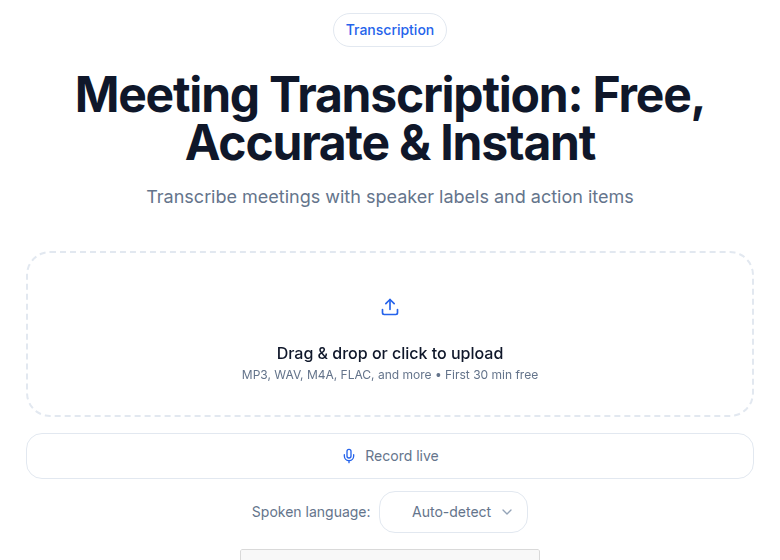 A meeting being transcribed using CATT's meeting transcription tool, showing speaker-labeled output relevant for call center and BPO workflows
This matters most in the industry that employs the most Filipinos doing audio work: the BPO and call center sector.
The Call Center Angle
The Philippines BPO industry generated roughly $38 billion in revenue in 2025 and employs over 1.5 million people, a significant share of them in voice-based customer support for US, Australian, and UK clients. These agents speak what might be described as "professional Philippine English" when on call, but their internal training sessions, team huddles, quality-assurance recordings, and escalation debriefs are conducted in Taglish.
This creates a significant transcription gap. The inbound English-language calls transcribe accurately on any modern engine. The internal operational audio, where the actual institutional knowledge lives, is Taglish and much harder to transcribe correctly. Human transcription services in the Philippines charge $0.50-$1.20 per audio minute for this work, with operators who are native Taglish speakers proofreading AI output.
For call-center QA and meeting documentation at scale, see meeting transcription tools and how to create meeting minutes from audio. The speaker diarization explained post covers why speaker labeling is particularly valuable for multi-agent call recordings.
What Breaks and What Holds
Based on the structural challenges above, here is what you can expect from current engines on different Tagalog content types:
Formal Tagalog (newsroom delivery, political speeches, academic lectures): Current engines perform best here. Vocabulary is more standardized, pacing is controlled, and code-switching is minimal. Expect accurate output with light editing.
Casual urban Tagalog/Taglish (YouTube vlogs, podcasts, social content): Higher code-switching density means more hybrid tokens. The English segments transcribe well; the Tagalog-affixed English constructions are where errors concentrate. Plan for more editing.
Regional accented Tagalog (Batangas, Bulacan, Cavite): These are Tagalog dialects with distinct intonation patterns. Engine training data skews toward Manila Tagalog (Metro Manila media dominates). Accuracy degrades somewhat on strong regional accents.
Call center internal audio (team huddles, QA reviews, training): Dense Taglish, fast pacing, overlapping speakers, industry jargon. This is the hardest category. Current engine accuracy is unverified by published benchmark; human review remains the standard for anything consequential.
For a comparison with another Southeast Asian language that faces similar code-switching dynamics, see Indonesian Bahasa transcription, where Jakartan mixed-register speech presents parallel challenges.
My Take
The story changed in 2026. A year ago, the practical answer to "can I transcribe Tagalog?" was "with significant caveats." Today, engines like Deepgram Nova-3 and AssemblyAI Universal-2 support Tagalog in production, with diarization and real-time streaming. The upgrade in pure-Tagalog support is real.
What did not change: Taglish remains genuinely difficult, for structural linguistic reasons that are not solved by adding Tagalog to a model's language list. The morphological integration of English into Tagalog grammar creates token-level ambiguity that breaks ASR systems trained separately on each language. Any content that's predominantly Taglish should be treated as requiring light human review regardless of which engine you use.
If you need a clean transcript for Tagalog or Taglish audio without building your own API pipeline, ConvertAudioToText handles audio uploads with speaker labeling and outputs a corrected, formatted transcript you can download directly.
For Taglish-heavy content where accuracy is critical (legal, medical, or public record), pair AI output with a native Taglish-speaking proofreader.
FAQ
What is the difference between Filipino and Tagalog for transcription purposes?
Filipino is the standardized national language of the Philippines, officially based on Tagalog with vocabulary drawn from other Philippine languages, Spanish, and English. In practice, the two are functionally the same for transcription. The main difference is at the API level: Google Cloud uses the code fil-PH, while Deepgram and OpenAI Whisper use tl. Test both codes with your engine; results are typically identical.
Which AI engine is best for Tagalog transcription in 2026?
Deepgram Nova-3 (code tl) added Tagalog in January 2026 with streaming support and keyterm prompting. AssemblyAI Universal-2 also covers Tagalog and includes summarization features. Google Cloud Speech-to-Text supports fil-PH on Chirp and Chirp_2. All three are production-ready for clean, clear Tagalog audio. For heavily Taglish content, no engine has published head-to-head benchmarks, so plan to evaluate on your own audio.
Why does Taglish trip up AI transcription?
Taglish combines Tagalog's agglutinative morphology with English vocabulary. Filipino speakers attach Tagalog verb prefixes and infixes to English roots: "nag-meeting," "i-submit," "magda-drive." Each of these hybrid forms is a novel token. A model trained primarily on Tagalog may mis-segment the English root; a model trained primarily on English may drop the Tagalog prefix. The result is substitution errors concentrated on exactly the high-information Taglish constructions.
Are Cebuano, Ilocano, and other Philippine languages the same as Tagalog for transcription?
No. Cebuano (Bisaya), Ilocano, Hiligaynon, and the other regional languages of the Philippines are distinct languages, not dialects of Tagalog. Selecting tl or fil-PH in an engine will not produce usable results for Cebuano audio. These languages have much more limited AI transcription support than Tagalog does, and fall into the genuinely low-resource category. See why AI struggles with low-resource languages for the structural reasons behind that gap.
Sources
- Deepgram: Tagalog Speech-to-Text
- Deepgram: Nova-3 Adds 12 New Languages
- Deepgram: Pricing
- AssemblyAI: Supported Languages
- AssemblyAI: Pricing
- Google Cloud: Speech-to-Text Supported Languages (V2)
- Google Cloud: Speech-to-Text Pricing
- Speechmatics: Tagalog Speech to Text
- Otter.ai: Pricing
- Wikipedia: Taglish
- Wikipedia: Tagalog language
Try transcription free
Convert any audio or video to clean, unwatermarked text — speaker labels, timestamps, and AI summaries included. First 30 minutes free, no account.
Related Articles
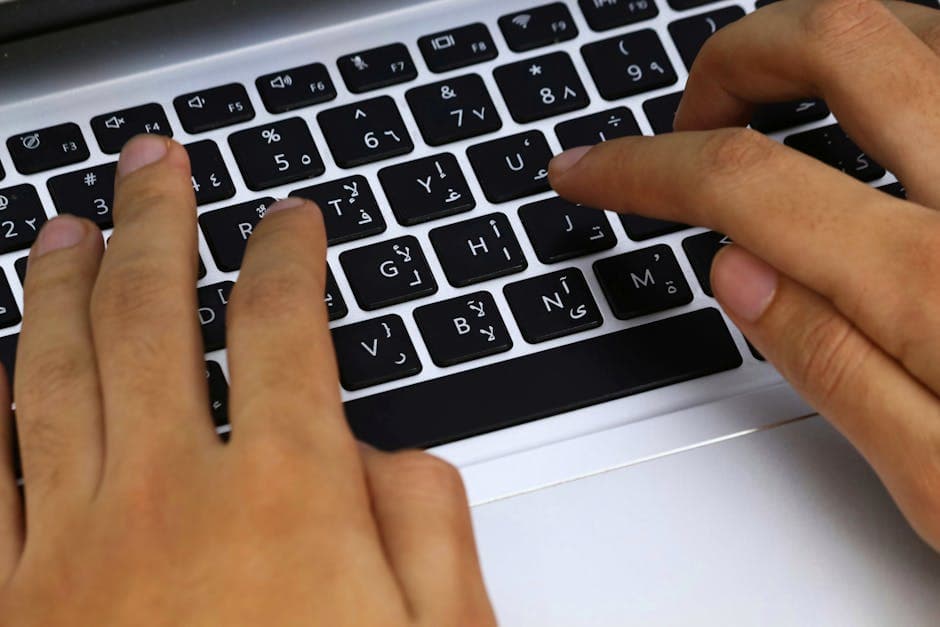
Arabic Transcription: MSA vs Dialects in ASR (2026 Guide)
How diglossia shapes Arabic speech-to-text accuracy. MSA vs Egyptian, Gulf, Levantine, and Maghrebi dialects: WER data, engine support, and script mechanics explained.
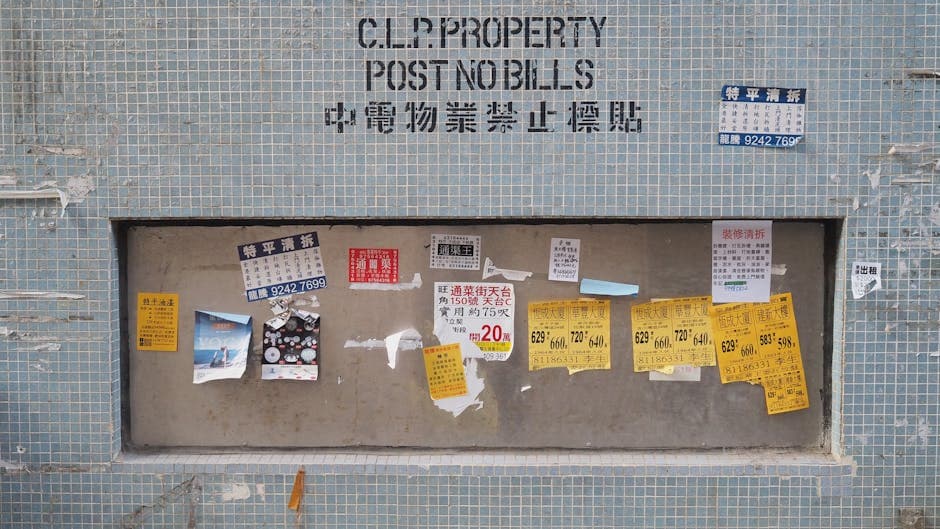
Mandarin Transcription: Simplified, Traditional, and Tones
Mandarin Chinese transcription: Simplified vs Traditional output, tone homophones, Cantonese honesty, and engine support in 2026.