Recording Consent Laws by State: 2026 Reference Table
Summarize this article with:
US recording law divides states into one-party consent (any participant can record) and all-party consent (everyone must agree). Twelve states are all-party, including six with hybrid rules that depend on whether the conversation is in-person or by phone. The safest practice across all 50 states is to announce the recording and get verbal confirmation before the substance of the call starts. This reference table covers every state, with statute citations where verified.
This post is general legal information, not legal advice. Recording law is state-specific, changes over time, and depends heavily on facts. If the legal stakes for your situation are significant, consult a licensed attorney in the relevant jurisdiction. ConvertAudioToText is a transcription service, not a law firm.
US recording law divides into one-party consent (any participant in a conversation may record it) and all-party consent (every party must agree before a recording can be made). Federal wiretap law under 18 U.S.C. § 2511(2)(d) sets a one-party consent floor: states can be stricter, and many are.
The binary one-party / all-party framing breaks down at the edges. Several states apply different rules depending on whether the communication is a phone call or an in-person conversation. Others have statutes that read one way but have been interpreted differently by courts. The table below captures these distinctions.
State-by-State Reference Table
The table groups states by their predominant rule and notes any hybrid or contested classification. "All-party" means all participants must consent; "one-party" means any participant can record.
| State | Rule | Statute | Notes |
|---|---|---|---|
| Alabama | One-party | Ala. Code § 13A-11-30 | |
| Alaska | One-party | Alaska Stat. § 42.20.310 | |
| Arizona | One-party | A.R.S. § 13-3005 | |
| Arkansas | One-party | Ark. Code Ann. § 5-60-120 | |
| California | All-party | Cal. Penal Code § 632 | Applies to "confidential communications"; defined broadly. Civil damages up to $5,000 per violation or 3x actual damages; criminal misdemeanor. |
| Colorado | One-party | Colo. Rev. Stat. § 18-9-303 | |
| Connecticut | Hybrid | Conn. Gen. Stat. §§ 53a-187, -189 (in-person); § 52-570d (phone/civil) | One-party for in-person under criminal law; all-party consent required for phone calls (civil statute imposes written or recorded verbal consent). |
| Delaware | All-party | Del. Code tit. 11, § 1335 | Conflict with § 2402 (one-party wiretap statute); § 1335 privacy statute requires all-party consent. Safer to treat as all-party. |
| District of Columbia | One-party | D.C. Code § 23-542 | |
| Florida | All-party | Fla. Stat. § 934.03 | Third-degree felony for first offense; up to 5 years, $5,000 fine. Applies to wire, oral, and electronic communications. |
| Georgia | One-party | Ga. Code Ann. § 16-11-62 | |
| Hawaii | Hybrid | Haw. Rev. Stat. § 803-42 (phone); § 711-1111 (in-person private places) | One-party for phone/electronic. All-party required for recordings in "private places" where participants have an expectation of privacy. |
| Idaho | One-party | Idaho Code § 18-6702 | |
| Illinois | All-party | 720 ILCS 5/14-2 | Applies to "private" conversations. Post-2014 amendments (after the original broad statute was struck down) narrowed the definition of private. |
| Indiana | One-party | Ind. Code § 35-33.5-1-5 | |
| Iowa | One-party | Iowa Code § 808B.2 | |
| Kansas | One-party | Kan. Stat. Ann. § 21-6101 | |
| Kentucky | One-party | Ky. Rev. Stat. § 526.020 | |
| Louisiana | One-party | La. Rev. Stat. § 15:1303 | |
| Maine | One-party / Hybrid | Me. Rev. Stat. tit. 15, § 709 | One-party for wire communications. Some sources note potential all-party requirements for certain private-place in-person contexts; outcome contested by courts. |
| Maryland | All-party | Md. Code, Cts. & Jud. Proc. § 10-402 | Civil and criminal penalties. High-profile case law (Linda Tripp) makes this one of the most litigated all-party states. |
| Massachusetts | All-party | Mass. Gen. Laws ch. 272, § 99 | Applies to both phone and in-person conversations. Unusually broad: prohibits secret recording even in public gatherings where the conversation would otherwise be audible. Criminal penalties up to $10,000 and 5 years. |
| Michigan | Effectively one-party | Mich. Comp. Laws § 750.539c | Statute reads "all parties," but courts recognized a participant exception in Sullivan v. Gray (1982): a party to the conversation may record it. Reaffirmed by a federal court in April 2026. Third-party eavesdroppers still face all-party requirements. |
| Minnesota | One-party | Minn. Stat. § 626A.02 | |
| Mississippi | One-party | Miss. Code Ann. § 41-29-531 | |
| Missouri | Hybrid | Mo. Rev. Stat. § 542.402 | One-party consent for phone/wire communications. RCFP and others read the statute as imposing all-party consent for in-person private conversations; no Missouri appellate court has definitively resolved this. |
| Montana | All-party | Mont. Code Ann. § 45-8-213 | |
| Nebraska | One-party | Neb. Rev. Stat. § 86-290 | |
| Nevada | Hybrid | NRS § 200.620 (phone); § 200.650 (in-person) | All-party consent required for phone and electronic calls (Nevada Supreme Court: Lane v. Allstate). One-party consent for in-person conversations. Category D felony for violations. |
| New Hampshire | All-party | N.H. Rev. Stat. § 570-A:2 | |
| New Jersey | One-party | N.J. Stat. § 2A:156A-4 | |
| New Mexico | One-party | N.M. Stat. § 30-12-1 | |
| New York | One-party | N.Y. Penal Law § 250.05 | |
| North Carolina | One-party | N.C. Gen. Stat. § 15A-287 | |
| North Dakota | One-party | N.D. Cent. Code § 12.1-15-02 | |
| Ohio | One-party | Ohio Rev. Code § 2933.52 | |
| Oklahoma | One-party | Okla. Stat. tit. 13, § 176.4 | |
| Oregon | Hybrid | Or. Rev. Stat. § 165.540 | All-party consent required for in-person oral conversations (participants must be specifically informed). One-party consent applies to phone and electronic communications. |
| Pennsylvania | All-party | 18 Pa. Cons. Stat. § 5703 | Third-degree felony; up to 7 years and $15,000 fine. Exception added Feb. 12, 2024: recipients of telemarketing/robocalls may record without caller consent to enforce the TCPA or Pennsylvania UTPCPL. |
| Rhode Island | One-party | R.I. Gen. Laws § 11-35-21 | |
| South Carolina | One-party | S.C. Code § 17-30-30 | |
| South Dakota | One-party | S.D. Codified Laws § 23A-35A-20 | |
| Tennessee | One-party | Tenn. Code Ann. § 39-13-601 | |
| Texas | One-party | Tex. Penal Code § 16.02 | |
| Utah | One-party | Utah Code § 77-23a-4 | |
| Vermont | One-party (federal default) | 18 U.S.C. § 2511(2)(d) | Vermont has no state wiretap or eavesdropping statute. Federal one-party consent baseline governs by default. |
| Virginia | One-party | Va. Code § 19.2-62 | |
| Washington | All-party | Wash. Rev. Code § 9.73.030 | |
| West Virginia | One-party | W. Va. Code § 62-1D-3 | |
| Wisconsin | One-party | Wis. Stat. § 968.31 | |
| Wyoming | One-party | Wyo. Stat. § 7-3-702 |
Federal Law: The Baseline
The Electronic Communications Privacy Act (ECPA), specifically 18 U.S.C. § 2511(2)(d), permits any participant in a conversation to record it without informing the other parties, provided the recording is not for a criminal or tortious purpose. Federal law applies to interstate communications and sets the minimum permissible standard. States can go further, and twelve do.
The Hybrid States: Where the Count Gets Contested
You will see sources citing anywhere from 11 to 14 all-party consent states, with disagreement stemming from the hybrid jurisdictions:
Connecticut is all-party for phone calls (civil statute, Conn. Gen. Stat. § 52-570d) but one-party under criminal law for in-person conversations (§§ 53a-187, -189).
Nevada is the inverse: all-party for phone calls under NRS § 200.620 (phone), one-party for in-person conversations under NRS § 200.650.
Oregon requires all-party consent for in-person oral conversations under Or. Rev. Stat. § 165.540 but only one-party consent for phone and electronic communications.
Missouri allows one-party consent for phone calls but has no appellate ruling on in-person private conversations; the RCFP reads the statute as all-party for in-person. Treat in-person private Missouri conversations cautiously.
Michigan has an all-party statute on its face, but the participant exception recognized in Sullivan v. Gray (Mich. App. 1982) and reaffirmed by a federal court in April 2026 means that anyone recording their own conversation is not eavesdropping under Michigan law. Third-party listeners remain subject to the all-party requirement.
Hawaii is one-party for phone and electronic communications (HRS § 803-42) but all-party for recordings made inside private places (HRS § 711-1111).
These distinctions matter most for transcription work: if you are a participant recording your own phone call in Michigan, you are under a different legal framework than if you are in Connecticut recording the same call.
What Changed Recently
Pennsylvania, February 2024: Under a 2024 amendment, recipients of telemarketing calls and robocalls may now record those calls without the caller's consent, specifically to document violations of the Telephone Consumer Protection Act (TCPA) or Pennsylvania's Unfair Trade Practices and Consumer Protection Law. This is a narrow exception; all other Pennsylvania all-party rules remain intact.
Michigan, April 2026: A federal court issued a ruling explicitly upholding Michigan's one-party participant exception. This is a reaffirmation, not a change: Michigan has been effectively one-party for participants since 1982. The ruling is notable because it closes any lingering ambiguity about federal-court interpretation.
Pennsylvania 2024 robocall exception and the Michigan reaffirmation are the only verified changes since 2023. No state flipped its fundamental all-party or one-party classification in that period.
Cross-Border Recordings
When callers are in different states, the question of which state's law governs is unresolved by any definitive federal rule. The most protective practice is to assume the most restrictive law applies. A call between someone in California and someone in Ohio should be treated as requiring all-party consent, because California's law may apply to the California party.
For recurring business recording practices that cross state lines, see the guidance on recording phone calls legally and the more detailed state-specific breakdowns in recording interviews legally by state.
Special Categories
Public spaces: Recording in public is generally protected by First Amendment principles, and in most states a conversation carried on in a place where it could reasonably be overheard is not a "confidential communication" covered by the wiretap statute. California's § 632, for example, explicitly excludes public gatherings from the definition of confidential communication.
Police interactions: Recording police performing duties in public is protected by the First Amendment in most federal circuits. State recording statutes do not override this protection in most jurisdictions, though the precise interaction between the First Amendment and state wiretap law varies by circuit.
Workplace recordings: Employers recording employees with posted notice is common practice; state statutes vary on what notice satisfies consent. Employee recording of employers may be protected as concerted activity under the National Labor Relations Act, but the underlying state wiretap statute still applies independently.
Court proceedings: State courts routinely prohibit recording by outside parties in proceedings. Violating a court's no-recording order is contempt, separate from any wiretap violation.
International callers: GDPR (EU), the UK GDPR, Canada's PIPEDA (one-party at the federal level, stricter in Quebec), and other frameworks apply to calls involving international parties. For international recording, these topics require jurisdiction-specific counsel.
Recording for Transcription
The recording consent laws govern the initial capture of the conversation. Once you have a lawfully obtained recording, transcribing it by any method (AI, human, automated service) does not require additional consent from the participants. If the recording itself was unlawful, the transcript inherits that problem.
For practical workflows involving legal, interview, or meeting transcription, see how to transcribe an interview recording and is AI transcription court admissible.
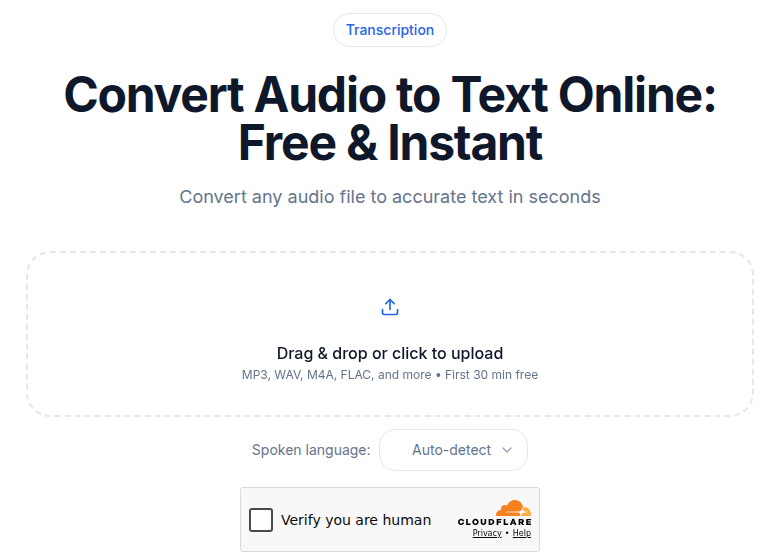 ConvertAudioToText audio upload tool for transcribing legally obtained recordings
If you just need a clean transcript from a legally obtained recording, ConvertAudioToText handles audio and video files across all 50 states, with no special setup required.
Practical Approach
The safest practice in all 50 states is the same: announce that the call is being recorded at the start, ask if anyone objects, and proceed only after getting confirmation. This takes about ten seconds and provides legal coverage everywhere:
- Announce recording at the start of the call.
- Get verbal confirmation from all participants.
- Capture that confirmation in the recording itself.
- For ongoing relationships (employment, client services), document the recording practice in writing.
Following these steps means you never have to look up your state's specific rule for each call. The cost of the announcement is trivial; the cost of getting the law wrong in California, Massachusetts, or Pennsylvania is not.
FAQ
What is the difference between one-party and all-party consent for recording?
In a one-party consent state, any participant in a conversation can record it without notifying the other parties. In an all-party (sometimes called two-party) consent state, every person in the conversation must consent before a recording can legally be made. The label "two-party" is technically a misnomer: a five-person call in California requires all five to consent, not just two.
Which states require all-party consent for recording?
California, Connecticut, Delaware, Florida, Illinois, Maryland, Massachusetts, Montana, New Hampshire, Oregon, Pennsylvania, and Washington are the primary all-party consent states. Connecticut and Nevada apply all-party rules only to phone calls; Oregon applies all-party rules only to in-person conversations. Nevada and Missouri have the opposite split. Michigan's statute reads all-party but courts have recognized a participant exception since 1982, reaffirmed by a federal court in April 2026.
Which state's law applies when callers are in different states?
There is no single definitive answer, and courts have resolved individual cases differently. The prevailing practice is to apply the most restrictive law among all states where a party is located. If one caller is in California (all-party) and the other is in New York (one-party), the California standard is the safer assumption. For any recurring cross-border recording practice, consult an attorney in the relevant states.
Can I transcribe a legally recorded call without additional consent?
Generally yes. Recording consent laws regulate the act of recording. Once you have a lawfully obtained recording, transcribing it (by AI, human, or any other method) does not require additional consent from the participants. If the original recording was unlawful, the transcript carries the same legal problem as the recording itself.
Is a recording or AI-generated transcript admissible as evidence in court?
Admissibility depends on how the recording was made, the jurisdiction, and what the transcript is offered to prove. Recordings obtained in violation of state wiretap laws are generally inadmissible in both criminal and civil proceedings in that state. AI-generated transcripts face additional questions around authentication and accuracy. For any matter where legal admissibility is a real concern, see our post on AI transcription and court admissibility, and consult legal counsel.
Sources
- 18 U.S.C. § 2511 - Federal Wiretap Act (Cornell LII)
- Recording Phone Calls and Conversations - 50 State Survey (Justia)
- Reporter's Recording Guide - Introduction (RCFP)
- Reporter's Recording Guide - Connecticut (RCFP)
- Reporter's Recording Guide - Massachusetts (RCFP)
- Reporter's Recording Guide - Nevada (RCFP)
- Two-Party Consent States (RecordingLaw.com)
- One-Party Consent States (RecordingLaw.com)
- Michigan Recording Laws 2026 (RecordingLaw.com)
- Federal judge upholds Michigan one-party consent - Detroit News, April 2026
- Nevada Recording Laws - RecordingLaw.com
- California Penal Code § 632 (Justia)
- Pennsylvania Wiretap Act - Shemtob Law
- Pennsylvania Recording Laws (RecordingLaw.com)
- Delaware Code tit. 11, § 1335 (FindLaw)
- Vermont Recording Laws (RecordingLaw.com)
- Missouri Recording Law (RCFP)
Try transcription free
Convert any audio or video to clean, unwatermarked text — speaker labels, timestamps, and AI summaries included. First 30 minutes free, no account.
Related Articles
Spotify Transcript Extractor: How to Copy and Download Episode Text
Get a Spotify podcast transcript you can copy and download: paste a public episode link, 30 minutes free with no signup, TXT or SRT files on eligible plans.
Call Transcription for Customer Support QA: A Practical CATT Workflow
Use call transcription for customer support QA to review calls faster and coach agents. Upload audio or a meeting URL, get speaker labels and AI summaries.