
How to Transcribe a Phone Call in 2026 (Legally and Accurately)
Summarize this article with:
Recording a phone call legally requires knowing whether your state needs one-party or all-party consent before you press record. iOS 26 adds native call recording with automatic transcript support, though the feature is blocked in the EU. Android Pixel phones (6 and up, Android 14+) now offer built-in recording across most markets. Once you have a clean recording, uploading to a transcription tool handles the rest, though phone audio's lower bitrate means a careful edit pass on numbers and proper nouns is always worth the time.
To transcribe a phone call, you need to solve two problems in order: recording both sides legally, then uploading the audio to a transcription tool. The legal step depends on where you and the other party are located. The technical step depends on how your phone captures audio. This guide walks through both.
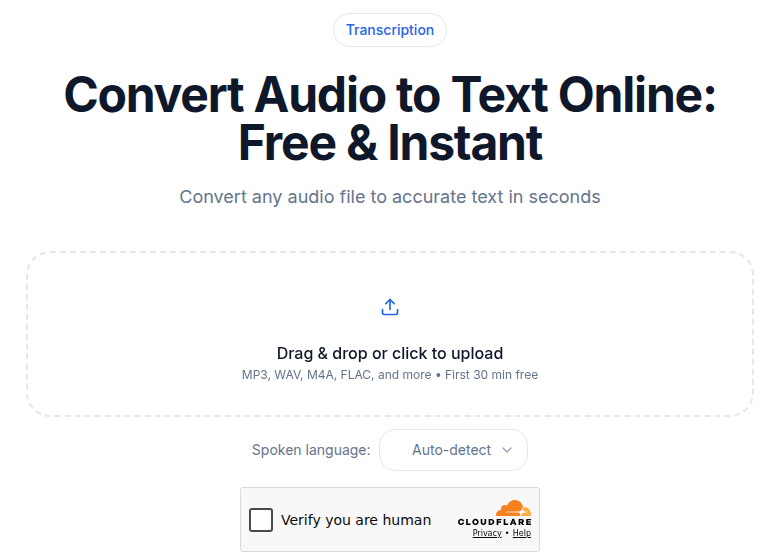 Once the call is recorded legally, transcription is a file upload
Consent Law: What You Need Before You Press Record
Is it legal to record a phone call without telling the other person?
Before recording any phone call, you need to know whether your jurisdiction requires one-party or all-party consent. Getting this wrong is not a minor oversight.
In the US, the split is 38 states vs. 12 states. The majority of states, including New York, Texas, Ohio, Georgia, and New Jersey, require only one-party consent: if you are on the call, you can record it. The 12 all-party (two-party) consent states are: California, Connecticut, Delaware, Florida, Illinois, Maryland, Massachusetts, Montana, New Hampshire, Oregon, Pennsylvania, and Washington. In those states, every person on the call must know it is being recorded.
If the call crosses state lines, apply the stricter rule. A reporter in New York interviewing a source in California falls under California law.
For EU calls, GDPR effectively requires all-party consent for any recording you process or store.
The safest universal practice: state at the start of every call, "I'm recording this for my notes. Is that OK?" Wait for verbal confirmation and let it land in the recording. That consent line is your evidence if the recording is ever challenged.
For a deeper look at the specific statutes and interstate nuances, see the guide on recording phone calls legally before you build any call-recording workflow.
Option 1: Built-In Phone Recording (The Easiest Path)
Both major mobile platforms now have native call recording, which gives you the cleanest audio with the least friction.
Does iOS 26 have built-in call recording?
iOS 26 added native call recording with automatic transcription, summaries, and Notes integration. During a live call, tap "More," then "Call Recording." When you start, both parties hear an automated message: "This call is now being recorded." You cannot suppress this announcement.
Recordings save to a locked "Call Recordings" folder in Notes, protected by your device passcode or Face ID. If your region and language are supported, iOS also generates a transcript you can read directly in Notes.
The important caveat: Apple has blocked this feature in the EU, Saudi Arabia, South Africa, and a number of other regions due to local regulations. If your iPhone region is set to one of those locations, the record button simply will not appear.
Can Android phones record calls natively?
Google expanded native call recording to Pixel 6 and newer phones running Android 14 and up across most markets globally in February 2026. Open the Google Phone app during a call and tap "Record." Both parties hear an automatic announcement that cannot be disabled. Recordings stay on the device.
Samsung, Xiaomi, and other Android manufacturers also include their own built-in recorders in their dialer apps, though availability varies by region and model. Check your dialer's in-call menu first before installing a third-party app.
For non-Pixel Android phones, the built-in option may or may not exist. Third-party apps are the fallback.
Option 2: Dedicated Third-Party Call Recording Apps
If built-in recording is unavailable on your device or region, third-party apps fill the gap using one of two mechanisms: a conference-merge trick (for iOS) or OS-level audio capture (for Android).
For iPhone
TapeACall Pro uses a conference-call bridge: when you start recording, the app calls a third number and merges it into your call, capturing both sides through the bridge. The audio quality is clean. Cost: around $10.99/year for iOS (verified on their subscription page). Both sides are recorded clearly because the merge captures the phone system's audio, not a microphone pickup.
Rev Call Recorder works the same way and is free for the recording step itself. Rev only works with US phone numbers. The recording is free; transcription is an optional paid add-on through Rev's human transcription service.
For Android
Cube ACR captures call audio at the OS level and has been around long enough to have adapted to Android's progressively stricter audio policies. Two-way recording works reliably through Android 14, though Bluetooth and wired headset use limits it on some devices. Android 15 and later may see further restrictions depending on the manufacturer's implementation. The app received updates as recently as January 2026 to maintain compatibility.
If Cube ACR does not work on your specific device, check whether your phone manufacturer's built-in dialer has a hidden record button first. Many Samsung and Xiaomi dialers do, especially on non-US firmware.
Option 3: VoIP Services with Native Recording
If both parties can use a VoIP service instead of a mobile line, you get the cleanest audio with the least effort.
Google Voice records incoming calls when you press 4 during the call. Both sides hear an announcement. Note: Google Voice only records incoming calls on the free plan; outgoing call recording requires the Premier plan.
Zoom Phone, Skype, and Microsoft Teams all have built-in call recording for VoIP calls. If your team already uses one of these, this is the simplest path. See the guide on how to transcribe a Zoom meeting if Zoom is your primary call platform.
Understanding Phone Audio Quality
Why are phone call transcripts less accurate than other audio transcripts?
Phone audio is low-fidelity by design. Cellular calls use codecs like AMR-NB at 12.2 kbps, capturing frequencies between 200 Hz and 3,400 Hz only. VoIP calls run at higher bitrates but still fall well short of studio audio. The practical consequence: AI transcription models score 5 to 10 percentage points lower on phone audio than on clean meeting or podcast recordings.
The specific error patterns matter:
- Numbers (phone numbers, dollar amounts, dates) are the most common failure point. The frequency range that distinguishes "fifteen" from "fifty" is often missing.
- Sibilants ("s", "f", "th") get compressed in ways that increase confusion.
- Cross-talk, where both parties speak at once, often causes one side to drop entirely.
These are predictable, which makes the edit pass manageable. For a broader look at how audio quality affects accuracy, see the post on transcription accuracy explained.
The Recording-to-Transcript Workflow
What is the cheapest way to transcribe a phone call?
For calls up to 30 minutes, ConvertAudioToText's audio-to-text tool handles M4A and MP3 files free with no account required. For longer interviews or bulk call transcription, a paid plan or API access scales better. The Weekly Pass at $9.99 one-time for 1,200 minutes (20 hours) is the cheapest no-setup option for a week of heavy call transcription. The main cost variable is audio quality: a clean VoIP recording takes fewer correction minutes than a speakerphone recording, which shifts the true cost toward editing time.
The full workflow:
- Export the recording. Most call recording apps produce M4A or MP3. Both work directly with upload-based transcription tools.
- Upload the file. The free anonymous upload handles short calls with no sign-in required.
- Set speaker count to 2. Phone calls almost always have two speakers. Enabling speaker diarization labels who said what and makes the transcript far more readable.
- Add vocabulary hints if relevant. Product names, client names, or technical terms specific to the call topic reduce errors.
- Run and then edit. The edit pass on a 30-minute call takes 10 to 15 minutes. Focus specifically on numbers, proper nouns, and any place where both parties spoke at once.
For interview transcription, the same workflow applies, with the added step of structuring the output by theme or question rather than leaving it as a raw time-coded transcript.
Use Cases That Drive Most Call Transcription
Customer support and sales call review are the highest-volume use cases. Teams transcribe recorded calls in bulk for quality assurance, coaching, and complaint resolution. For small teams doing dozens of calls per week, batch upload or API access is more practical than transcribing one file at a time. See transcription pricing models explained for a comparison of per-minute vs. subscription approaches.
Journalism and research interviews are lower volume but higher stakes. A missed number or name can be a factual error in print. The edit pass is not optional here.
Personal records (medical consultations, legal discussions) are valid uses. Consent law applies equally, and the recording is primarily for your own reference rather than publication.
The Edit Pass for Phone Calls
My take: this is where people cut corners and regret it. Phone audio makes certain errors predictable and repeatable:
- Check every number. Dates, prices, phone numbers, addresses. All of them.
- Check every proper noun. Company names, product names, people's names.
- Look for places where the speaker label switches mid-sentence. That usually signals cross-talk or a dropped section.
- Verify any quoted figure before it goes into a report or document.
A 15-minute edit on a 30-minute call is a reasonable estimate. Budget more for calls with heavy industry jargon or non-native speakers.
Multilingual Phone Calls
Transcribe in the original language first, then translate the text. Running speech-to-translation in a single step consistently underperforms the two-step approach on phone-quality audio. Most transcription tools support the major European and Asian languages natively. For diarization accuracy on non-English calls, speaker diarization explained covers how the models handle mixed-language and accented speech.
Storage and Retention
Recorded calls often contain sensitive information. PII appears frequently in support calls (credit card numbers, addresses) and research interviews (personal health details, salary figures). Practical defaults:
- Store recordings in encrypted cloud storage with access limited to the people who need it.
- Set a retention policy (30 to 90 days is typical for support calls) and delete on schedule.
- If the transcript contains credit card numbers or SSNs, redact them before sharing the document.
Common Failure Modes
Recording only one side. The most common mistake is recording during a non-speakerphone call using the phone's microphone directly. The result is only your half of the conversation. Always test your setup before an important call.
Forgetting the consent line. The habit only needs to form once. Make "I'm recording this call, is that OK?" the first thing you say on every recorded call.
Trusting numbers without checking. A sales transcript with the wrong deal size or a medical note with the wrong dosage is worse than no transcript. Phone audio makes number errors frequent enough that skipping the review is a genuine risk.
Sources
- Apple iOS Feature Availability
- Apple Support: What's new in iOS 26
- recordinglaw.com: Two-Party Consent States 2026
- 9to5Google: Pixel Call Recording expands internationally (February 2026)
- Google Phone App Help: Use the Phone app to record calls
- TapeACall subscription options
- Rev Call Recorder app
- Cube ACR FAQ
- Engadget: How to record a phone call on an iPhone
Try transcription free
Convert any audio or video to clean, unwatermarked text — speaker labels, timestamps, and AI summaries included. First 30 minutes free, no account.
Related Articles

Transcription for Law Firms: Ops, Privilege, Vetting
How law firms use AI transcription for client intake, dictation, and case prep, plus the specific use cases that require certified human services and a vendor vetting checklist.
Spotify Transcript Extractor: How to Copy and Download Episode Text
Get a Spotify podcast transcript you can copy and download: paste a public episode link, 30 minutes free with no signup, TXT or SRT files on eligible plans.