
Transcription for Board Meetings: Governance-Grade Records
Summarize this article with:
A board meeting transcript is the verbatim record behind the formal minutes, not a replacement for them. It closes the gap between what summary minutes capture and what actually happened, and that gap matters most when a decision is later contested. This guide covers the end-to-end workflow: consent, recording, transcript review, minutes drafting, and archive, along with the legal considerations that make board transcription different from ordinary meeting notes.
Board meeting minutes are a legal record. A transcript is the verbatim record that makes those minutes defensible. The two are not the same thing, and confusing them is the source of most governance risk in corporate record-keeping.
This guide is for corporate secretaries, general counsel, and board chairs who need their meeting records to hold up under legal scrutiny. It covers the full workflow, the legal context by jurisdiction, and the practical decisions that make board transcription tractable at a reasonable cost.
Why Minutes Alone Are Not Enough
Board minutes serve two audiences. The immediate audience is the board itself, plus committee members, executives, and lawyers who reference the minutes in the months following a meeting. The eventual audience may include regulators, litigators, and forensic accountants in situations you hope never arise.
Standard minutes summarize what was decided. This works fine when nobody disputes the outcome. When a decision becomes contested (a shareholder lawsuit, an SEC inquiry, an internal investigation), summary minutes often cannot answer the specific question being asked. "The board discussed and approved the acquisition" does not tell you whether directors fulfilled their duty of care in reviewing the deal, who raised concerns, or what alternatives were considered.
A transcript provides the underlying record. The minutes summarize. The transcript proves what was actually said.
For US public companies and many private companies, the standard of director care is heightened by Caremark and subsequent Delaware case law. Recent Delaware decisions in 2026 have continued to emphasize that boards should document oversight activities thoroughly enough to demonstrate good-faith engagement with material risks. A verbatim transcript is the strongest form of that documentation. It lets you show, line by line, that directors actually questioned assumptions, considered alternatives, and made informed decisions.
The Workflow From Recording to Archive
Board meeting transcription requires more procedural rigor than ordinary meeting notes, because the output is a legal artifact. Here is the end-to-end workflow:
Pre-meeting: confirm consent. Most board members expect detailed record-keeping. Confirm recording consent at the first meeting of the year and document it in minutes. Some boards include recording consent in the annual calendar resolution. Note any standing exceptions (executive sessions, litigation discussions with counsel) in the same resolution.
During the meeting: record with care. Use multiple microphones if possible. A single laptop mic in a large conference room degrades transcription accuracy enough to create review work later. For remote board meetings via Zoom or Microsoft Teams, the platform's native recording is generally adequate.
Post-meeting: process the transcript. The recording goes to a trusted system for transcription. Review the system's data handling before using it for board content; see the tooling section below.
Transcript review: the corporate secretary reviews the transcript against notes and memory before incorporating it into the formal minutes. Corrections focus on material accuracy: names, votes, financial figures, and proper nouns that the AI may have mis-transcribed. The reviewed transcript becomes a supporting document to the official minutes.
Formal minutes: drafted from the transcript, then circulated to board members, revised, and approved at the next meeting per the company's standard process.
Archive: the transcript, the original recording, and the approved minutes are stored together as a complete corporate record package. Retention periods follow corporate counsel guidance; for most US companies, board records are retained permanently.
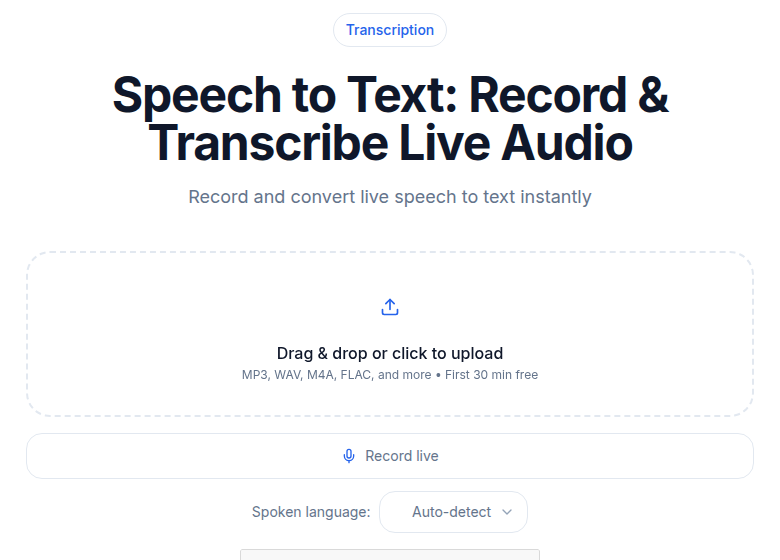 Governance recordings transcribe through the same pipeline, retention handled deliberately
For a practical companion to this workflow, see how to create meeting minutes from audio, which covers the minutes-drafting step in detail.
Legal Considerations by Jurisdiction
Three legal questions arise consistently, with different answers depending on where your company is incorporated.
Privilege: can transcripts be subpoenaed? Generally yes, in the same way as written minutes. Board meeting transcripts are not privileged unless they specifically contain attorney-client communications. Privilege depends on the nature of the communication, not the medium of the record. Treat the transcript with the same legal care as the official minutes. For executive sessions and litigation discussions with counsel, the standard practice is to pause the recording or to process that section separately under tighter access controls.
Section 220 inspections (Delaware): Delaware shareholders have statutory inspection rights over corporate books and records. Under the 2025 amendments to DGCL Section 220, demands must now be made with greater particularity and shareholders must show compelling need for records beyond those automatically available. Whether a specific meeting's transcript falls within scope depends on the particular demand and the subject matter of the meeting. Consult Delaware counsel on any inspection demand that implicates board transcripts.
GDPR (EU): meeting recordings that contain voice and identifying information qualify as personal data under GDPR. Lawful basis for processing must be established before recording, participants must be informed, and retention periods must be documented in advance. The European Data Protection Board selected transparency and disclosure obligations as its 2026 coordinated enforcement focus. If your board includes EU-based directors, ensure your recording and transcription workflow has a compliant legal basis (typically legitimate interest for corporate governance purposes) and that your data processor agreements cover the transcription vendor.
UK and other jurisdictions: UK companies operating under the Companies Act have their own record-keeping requirements. Asia-Pacific jurisdictions vary widely. Consult counsel for your specific requirements.
Retention: for most US companies, board minutes and supporting records (including transcripts) are retained permanently. Have a written retention policy that addresses transcripts specifically. Relying on the minutes policy alone may leave the retention status of transcripts ambiguous.
What Makes a Transcript Audit-Defensible
If a transcript ever needs to hold up in a dispute, these factors matter:
Chain of custody. Document who took the recording, when it was processed, and who reviewed the transcript. A simple log entry works: "Recording taken by [secretary] on [date]. Processed by [tool]. Reviewed and approved as part of minutes on [date]." Keep that log with the other corporate records.
Accuracy verification. The corporate secretary should review the transcript against memory and notes for material accuracy before it is circulated. For high-stakes meetings (major acquisitions, significant litigation, restructuring), a second review by outside counsel on the relevant sections is worth the time.
Speaker identification. Who said what matters when a vote or dissenting opinion later becomes relevant. Modern AI transcription tools apply speaker labels automatically. Validate the labels during your review pass; mislabeled speakers create problems if the transcript is referenced in a dispute.
Timestamps. The transcript should include timestamps that align with the original recording. This allows independent verification of any specific passage against the audio source.
Original recording preservation. Keep the original audio file alongside the transcript. The transcript is a derivative; the original is the source of truth if the transcript is challenged.
My take: the chain-of-custody log and the original recording are the two elements most often omitted in practice. Both are simple to maintain and disproportionately valuable if the records are ever scrutinized.
Committee Meetings: Differentiated Handling
Most boards run several committees, each with its own governance function and corresponding record-keeping requirements. A single policy does not fit all of them.
| Committee | Record type | Access controls | Special considerations |
|---|---|---|---|
| Full board | Transcript + minutes | Board members, corporate secretary, counsel | Standard workflow |
| Audit committee | Transcript + minutes | Committee members, external auditor | Transcript may be made available to external auditor; SOX relevance |
| Compensation committee | Transcript + minutes | Committee members, compensation counsel | Stricter access; executive pay is highly sensitive |
| Risk committee | Transcript + minutes (pause for privileged sessions) | Committee members, risk counsel | Pause recording during litigation strategy discussions with counsel |
| Nominating and governance | Transcript + minutes | Committee members, corporate secretary | Board composition discussions; confirm handling with counsel |
Audit committee. Transcripts may satisfy the external auditor's interest in understanding the quality of oversight, beyond what summary minutes reflect. Confirm the auditor's preferences for record access before establishing the workflow.
Compensation committee. Executive pay decisions are among the most litigation-sensitive corporate records. Some companies run a separate transcription pipeline for this committee with narrower distribution and more restrictive access controls.
Risk and audit committees with privileged discussions. When sessions include litigation strategy with counsel, the recording should pause. If a session inadvertently captures privileged communications, flag that section during review and consult counsel before distributing.
Tooling for Board-Grade Transcription
The transcription tool needs to clear a higher bar than for ordinary team meetings. The three criteria that matter most in a board governance context:
Data handling and privacy. The recording cannot be used to train third-party models or shared with external parties without consent. Verify the vendor's data processing terms before using any tool for board content. For EU boards, confirm whether the vendor offers data processing agreements and where data is processed and stored.
Accuracy on financial and legal terminology. AI transcription models handle corporate vocabulary well in 2026, but company-specific names, product names, and custom financial terms may need a review pass to catch errors. No AI tool produces a court-ready transcript without human review; plan for that step.
Speaker identification. Required for board meetings where votes and dissenting opinions need to be attributable. Confirm the tool applies speaker labels and validate them as part of your review workflow.
For very high-stakes meetings where a human-reviewed transcript adds material assurance, Rev offers human transcription at $1.99 per minute (approximately $120 per hour) with standard delivery in 12 hours. That is a significant cost premium over AI transcription, and for routine board meetings with a good secretary review pass, AI transcription is sufficient. The comparison between AI and human transcription approaches covers when the premium is justified.
Tools like Otter.ai are designed for team meeting workflows and may not meet the data handling requirements your general counsel expects for board content. Otter's standard plans permit use of data for AI model improvement; their enterprise plan offers stricter controls. Verify with legal before selecting any vendor.
If you just need a clean, speaker-labeled transcript without a meeting bot joining the call, ConvertAudioToText accepts audio and video files directly and returns a full transcript with timestamps.
Annual Meetings and Special Cases
Annual meeting of shareholders. Typically already recorded by the company. Transcription of the formal business portions is straightforward. Q&A sessions with shareholders involve additional considerations around shareholder identity and the sensitivity of questions asked.
Special meetings. Convened for specific decisions (mergers, major capital transactions). Transcription is appropriate for the formal record, and the stakes often justify more rigorous review.
Section 220 inspection demands. As noted above, Delaware's 2025 amendments narrowed what stockholders can reach under inspection demands. Whether a transcript is producible depends on the specific demand and subject matter. Consult Delaware counsel before producing or withholding transcripts in response to any demand.
Activist and contested situations. When activist shareholders or significant litigation is in play, every word of a board meeting recording becomes potential evidence. Recording quality, speaker accuracy, and chain-of-custody documentation should match the stakes. This is also the scenario where human review of the AI transcript earns its cost.
What This Costs
For a typical mid-sized company with quarterly board meetings, three committees meeting quarterly, and an annual meeting, the total board-related audio runs roughly 40 to 60 hours per year. At $9.99 per month on an unlimited plan, the annual cost is about $120. For context, a single hour of Rev human transcription at $1.99 per minute costs about $120.
For high-stakes sections where human accuracy verification matters (a specific vote, a significant dissenting opinion), the practical approach is AI transcription for the full meeting plus a targeted human review of the relevant passages. That combination keeps cost manageable and provides the accuracy assurance where it counts.
See the hidden costs of transcription services for a fuller breakdown of what to watch for when evaluating vendor pricing.
Start With Your Next Board Meeting
If your board does not currently transcribe meetings, start with the next one. Confirm consent at the opening of the meeting. Record. Process the transcript. Compare it against the minutes you would have produced from notes alone.
If the transcript surfaces things the minutes would have missed, the case for adopting it formally writes itself. Present the workflow to the board chair and update the corporate secretary's governance documentation at the following meeting. The incremental work per meeting is modest; the value when a record is ever scrutinized is not.
For boards that currently produce minutes from notes and memory, a six-month trial with transcripts alongside the existing process is a low-risk way to build institutional confidence in the workflow before committing to it formally.
Cross-link: multilingual meeting transcription for boards with members in multiple countries, and speaker diarization explained for a technical grounding in how AI assigns speakers to words.
Common Questions
Do board meeting transcripts need to be filed with regulators?
No. Transcripts are internal corporate records, not regulatory filings. However, they may be subject to production in litigation, shareholder inspection demands under Section 220 (Delaware), or regulatory investigation. Treat them with the same confidentiality as the official minutes.
Can transcripts be withheld as attorney-client privileged?
The transcript itself is not privileged merely because a board meeting took place. Only the portions that specifically contain attorney-client communications qualify for privilege protection, and recording those portions may itself complicate privilege claims. The standard practice is to pause the recording during sessions where counsel is giving legal advice.
How long should board meeting transcripts be retained?
For most US companies, board minutes and supporting records are retained permanently. Your transcripts should follow the same retention schedule as the official minutes. Have a written retention policy that names transcripts explicitly so there is no ambiguity about their status.
What if the AI transcript contains errors in a vote or financial figure?
The corporate secretary's review step is specifically designed to catch this. Material errors (votes, dollar figures, proper names) should be corrected before the transcript is circulated or archived. For this reason, the transcript is a supporting document to the official minutes, not an autonomous record. The approved minutes remain the controlling document.
Do we need to tell board members the meeting is being recorded?
Yes, in virtually every jurisdiction. Best practice is to confirm consent at the first board meeting of the year and document it in the minutes. Some boards include recording consent in the annual organizational resolutions. Consult counsel for the specific requirements in your jurisdiction, particularly if board members are located in multiple countries with different consent laws.
Sources
- Rev human transcription pricing: https://www.rev.com/services/human-transcription
- Delaware General Corporation Law Section 220 (Justia, 2025): https://law.justia.com/codes/delaware/title-8/chapter-1/subchapter-vii/section-220/
- Delaware 2025 Section 220 amendments (Perkins Coie): https://perkinscoie.com/insights/update/delaware-significantly-narrows-scope-stockholder-inspection-corporate-books-and
- Caremark claims and board oversight standards (Sidley Austin, 2026): https://www.sidley.com/en/insights/publications/2026/04/caremark-claims-limited-delaware-court-clarifies-board-oversight-and-liability-standards
- GDPR meeting recording compliance (IAPP): https://iapp.org/news/a/how-do-the-rules-on-audio-recording-change-under-the-gdpr
- Otter.ai privacy and security: https://otter.ai/privacy-security
- ConvertAudioToText pricing: https://convertaudiototext.com/pricing
Try transcription free
Convert any audio or video to clean, unwatermarked text — speaker labels, timestamps, and AI summaries included. First 30 minutes free, no account.
Related Articles

Spotify Transcript Extractor: How to Copy and Download Episode Text
Get a Spotify podcast transcript you can copy and download: paste a public episode link, 30 minutes free with no signup, TXT or SRT files on eligible plans.
Focus Group Transcription for UX Researchers: Turn Multi-Speaker Audio Into Usable Evidence
A practical guide to focus group transcription for UX and insights teams. See how CATT handles speaker labels, timestamps, AI summaries, and clean export.